Why Methods Based on Dominance are Dangerous

Welcome to my first ever blog post!
My blogs will always be based on science and I will reference my sources throughout my posts as well as include all references in full at the end.
I thought that a good way to begin my blogging journey would be to explain my methods and how they differ from ‘traditional’ dog training methods based on dominance.
In this post I will explain:
- Where dominance methods came from
- Problems with dominance methods
- What methods we should use instead
Where Did Dominance Methods Come From?

In 1947 Rudolph Schenkel was studying wolves in captivity and recording their behaviours. This study was built upon by David Mech in the 1960s. Their observations showed that wolves in captivity have a hierarchy: there is a ranking system in the pack. This study was then generalised to domestic dog behaviour.
Trainers started advocating methods based on dominance. They told dog owners that they needed to show their dog who was boss and be the alpha dog (Hiby et al., 2004). These methods often used punishment and resulted in the dog fearing their owner.
Problems with Dominance Methods
There are so many issues with this approach! Here are five:
1. The wolves were in captivity.
Although Schenkel (1947) and Mech showed that wolves have a hierarchy in captivity, multiple studies have shown that this is not the case with wolves in the wild. In fact, wolves in the wild have family groups where the parents are in charge (Mech, 1999). The parents are not ‘dominant’ they are just in charge because they are the parents- just like us with our children!
2. Dogs are not wolves: they are two related, but different species.
Furthermore, dogs are domesticated, not in captivity so the context is completely different (Mech, 1999).
It would be like applying a study on apes in a zoo to humans. It doesn’t make sense!

3. Punishment is not as effective as reward-based methods.
Multiple studies have shown that methods based on rewarding your dog for good behaviour is much more effective and longer lasting than methods based on punishment (Hiby et al., 2004).
In fact, studies have shown that dogs learn better when they are happy and confident (rather than anxious and threatened) (Hasegawa et al., 2014).
4. Dominance methods are more likely to lead to aggression in dogs.
Methods based on punishment and fear mean that your dog is less able to communicate to you when they are unhappy in a situation. Their fear grows until they are pushed to their limit, and then they snap. Aggression is usually a result of fear and is a last resort for a scared dog (Polo et al., 2015). By using punishment, we are more likely to induce aggression in our dogs.
5. The authors of the original study have since published an article admitting they were wrong to apply behaviour of wolves in captivity to domestic dogs.
The people who first suggested applying wolf behaviour to our pet dogs have agreed that they were wrong and publicly announced it (Mech, 1999)!
If this doesn’t convince you that methods based on dominance are wrong, then I don’t know what will!
So What Methods Should We Use?
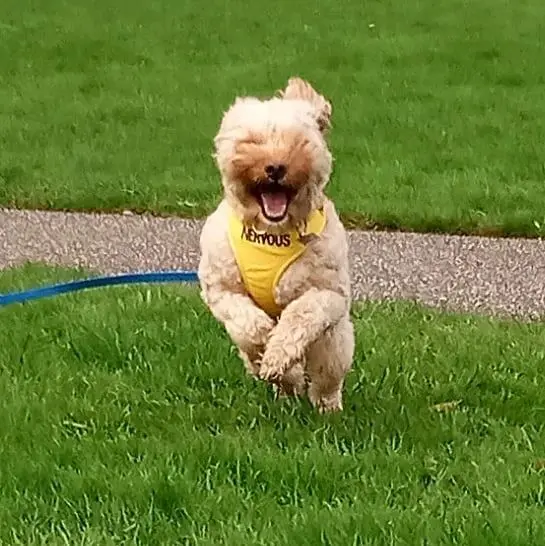
Positive reinforcement is a method based on dog behaviour (rather than wolf behaviour!) which builds the relationship between owner and dog (Hiby et al., 2004). This method is based on encouraging your dog to do the behaviour you want and rewarding them whenever they get something right.
Using positive reinforcement, we work with our dogs, as a team, rather than attempting to ‘dominate’ them (Hiby et al., 2004). This makes training fun for everyone while improving our dog’s confidence and skills.
Despite the growth of positive reinforcement training, some dog trainers still use outdated methods based on punishment and fear. When doing your own research on dog training, watch out for the language people are using. Are they using methods promoting fear? Or are they promoting methods in which you work with your dog, using rewards to motivate them?
References
Hasegawa, M., Ohtani, N. and Ohta, M. 2014. ‘Dogs’ body language relevant to learning achievement’. Animals 4(1): 45-58.Hiby, E.F., Rooney, N.J. and Bradshaw, J.W.S. 2004. ‘Dog Training Methods: their use, effectiveness and interaction with behaviour and welfare’. Animal Welfare 13(1): 63-70.
Hiby, E.F., Rooney, N.J. and Bradshaw, J.W.S. 2004. ‘Dog Training Methods: their use, effectiveness and interaction with behaviour and welfare’. Animal Welfare 13(1): 63-70.
Mech, L.D. 1999. ‘Alpha status, dominance, and division of labor in wolf packs’. Canadian Journal of Zoology 77(8): 1196-1203.
Polo, G., Calderon, N., Clothier, S. and Garcia, R.D.C.M. 2015. ‘Understanding dog aggression: Epidemiologic aspects.’ Journal of Veterinary Behaviour 10(6): 525-534.
Schenkel, R. 1947. ‘Expression studies of wolves’. Behaviour 1: 81-129.