Why Does My Dog Get Overexcited?
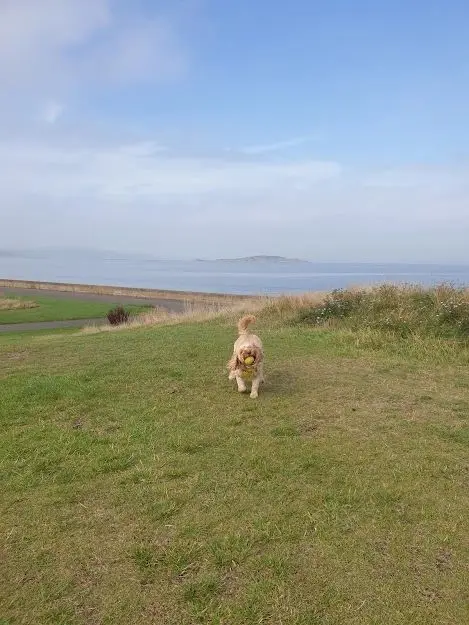
Overexcitement can lead to a host of undesirable behaviours such as jumping up, barking, toileting inside and humping.
There are lots of causes for overexcitement, but here are a few of the most common ones:
1. Physical Exercise
Dogs who are not getting adequate physical exercise are more prone to overexcitement. Exercise helps our dogs relax and releases feel-good hormones, resulting in a happy, relaxed dog.
However, over exercise can also create overexcitement. If a dog is regularly exercised too much, they will expect this amount of exercise and be more likely to be overexcited when they don’t get it.
Get to know your own dog. Watch their body language and behaviour before, during and after walks. This will help you spot when they are reaching their limit so you know how much exercise they need.
2. Mental Exercise
Mental exercise is just as important as physical exercise. Dogs are intelligent and need to get their brains working! A physically exercised dog who is not also receiving mental exercise will be more prone to overexcitement.
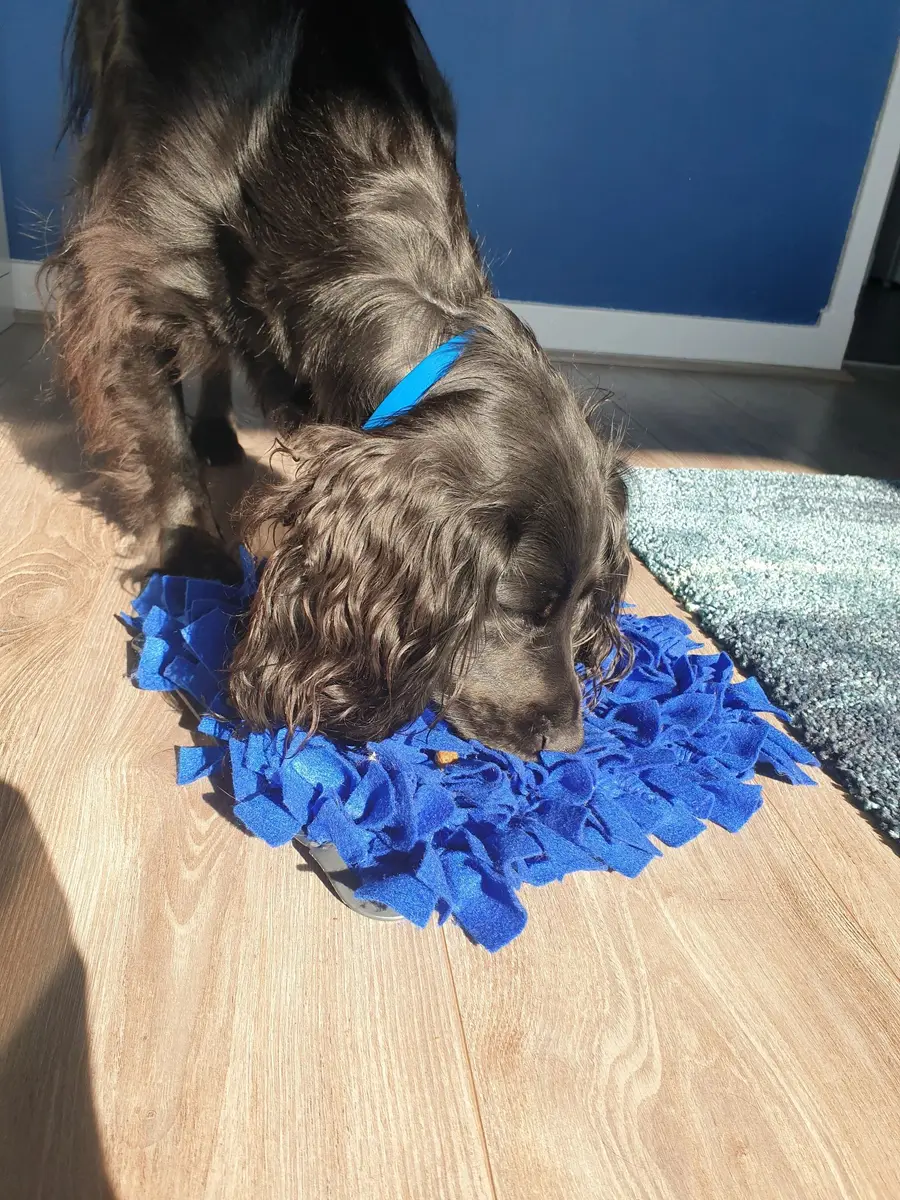
There are easy ways we can provide mental exercise to our dogs. For example, scattering their food in the grass to sniff out, puzzle toys, hide and seek and basic training.
3. Over-Stimulation
We also need to be careful not to overstimulate our dogs. Dogs who are over-tired tend to be more excitable- just like children who miss their nap or stay up past their bedtime!
Think about how much stimulation you are giving your dog. For example, some dogs may find a trip to the beach very stimulating, so keep these trips short.
Watch your dog’s body language so you can spot the warning signs and prevent them from becoming overstimulated in the first place.
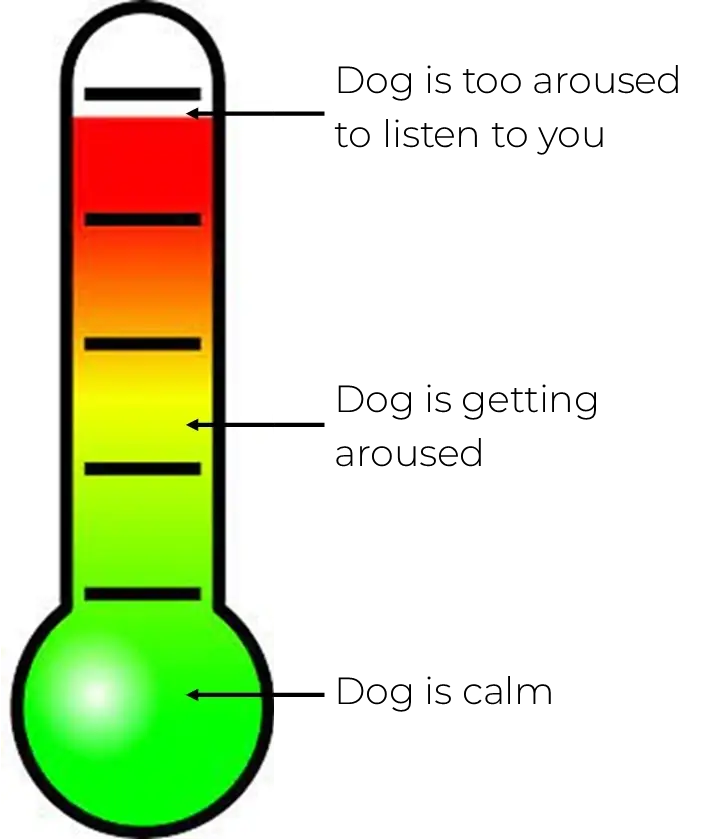
See Arousal Thermometer- we want to keep our dogs below the red level as the more aroused they are, the harder it is to calm them down again!
4. Learned behaviour
If your dog always gets excited at the front door, regardless of who is there, this is probably a learned behaviour. Your dog has learned that when the doorbell rings they get excited.
Jumping up is also often a learned behaviour. Your dog jumps up at you because they are excited, they get attention when they do it, so they learn jumping up is rewarding and repeat it in the future.
Now we know more about the causes of overexcitement, we can start to help our dogs manage it.
If we only try to manage these undesirable behaviours without tackling the overexcitement, the emotion will be expressed in other ways. For example, if we manage to stop our dog barking without tackling the overexcitement, they will probably express the emotion by jumping up or humping instead.
My next blog post will be all about easy ways to reduce overexcitement in your dog, thus reducing the undesirable behaviours as well!
Sign up here so you don’t miss it: www.rosypawsedinburgh.co.uk/blog
References
Dogs Trust. ‘How to Prepare Your Dog for Visitors’ https://www.dogstrust.org.uk/help-advice/training/visitor-training
Dogs Trust. ‘Situation Stacking’ https://www.dogstrust.org.uk/help-advice/dog-care/vet-clinics/situation-stacking
PDSA. ‘Food and fitness for a health dog’. Available at: https://www.pdsa.org.uk/media/2543/pdsa-food-and-fitness-for-a-healthy-dog.pdf
Rosy Paws. Canine Enrichment. https://rosypawsedinburgh.co.uk/blog/f/what-is-canine-enrichment-and-why-does-it-matter
Schipper, L.L, Vinke, C.M., Schilder, M.B. and Spruijt, B.M. 2008. ‘The effect of feeding enrichment toys on the behaviour of kennelled dogs’. Applied Animal Behaviour Science 114: 182-195.