Whistle Training in 4 Simple Steps
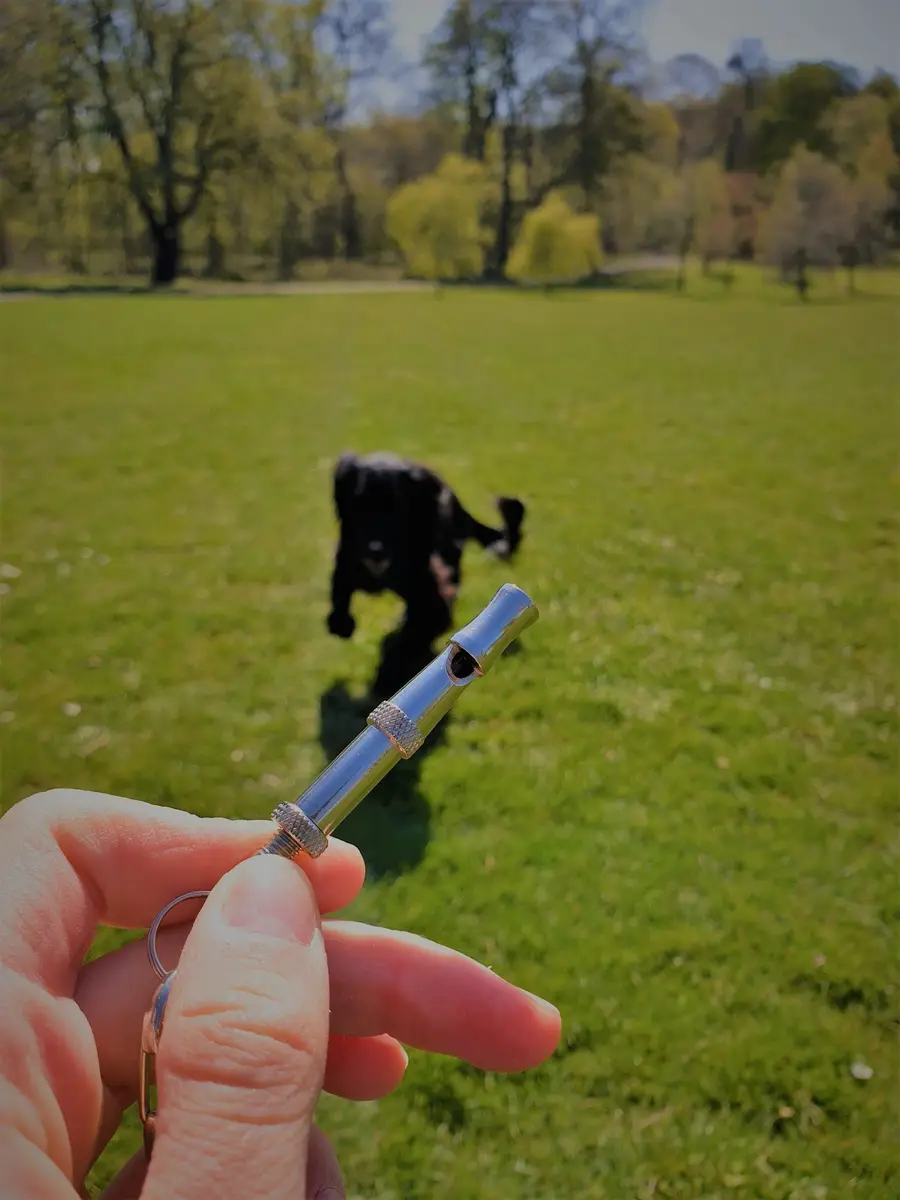
Training your dog to recall to the sound of a whistle can be really useful!
- It provides one clear, consistent signal which your dog knows means ‘come back’ (Arhant et al., 2010)
- The sharp short sound of a whistle can help cut through distractions and bring your dog’s attention back to you (Wells et al., 2002)
- The noise of a whistle can carry much further than the human voice (ibid, 2002)
I whistle trained my own dog when he started chasing swallows and was so engrossed he wouldn’t listen to me calling him. The whistle really helped get his attention and he quickly learned that the whistle resulted in much better rewards than chasing the swallows!
How do I whistle train my dog?
Step 1: Teaching your dog what the whistle means
- Before using a whistle for recall we need to teach our dog what the sound means (Arhant et al., 2010)!
- Have some extra special treats which your dog ONLY gets when they hear the whistle.
- Start with your dog next to you in a low distraction environment. Blow the whistle and immediately give them one of the tasty treats. We need our dog to learn that whistle= tasty treat (Hiby et al., 2004)
Step 2: Teaching recall to the whistle
- Once your dog has learned that whistle=treat, wait until they are a little away from you. Call their name to get their attention, then blow the whistle while they are already running towards you. Give them the treat when they reach you.
- It is important at this stage to ONLY blow the whistle when they are already running towards you. The more times you blow the whistle and they don’t come, the less effective the whistle will be and the more likely they are to ignore it (Dogs Trust, 2019).
Step 3: Continuing whistle recall training
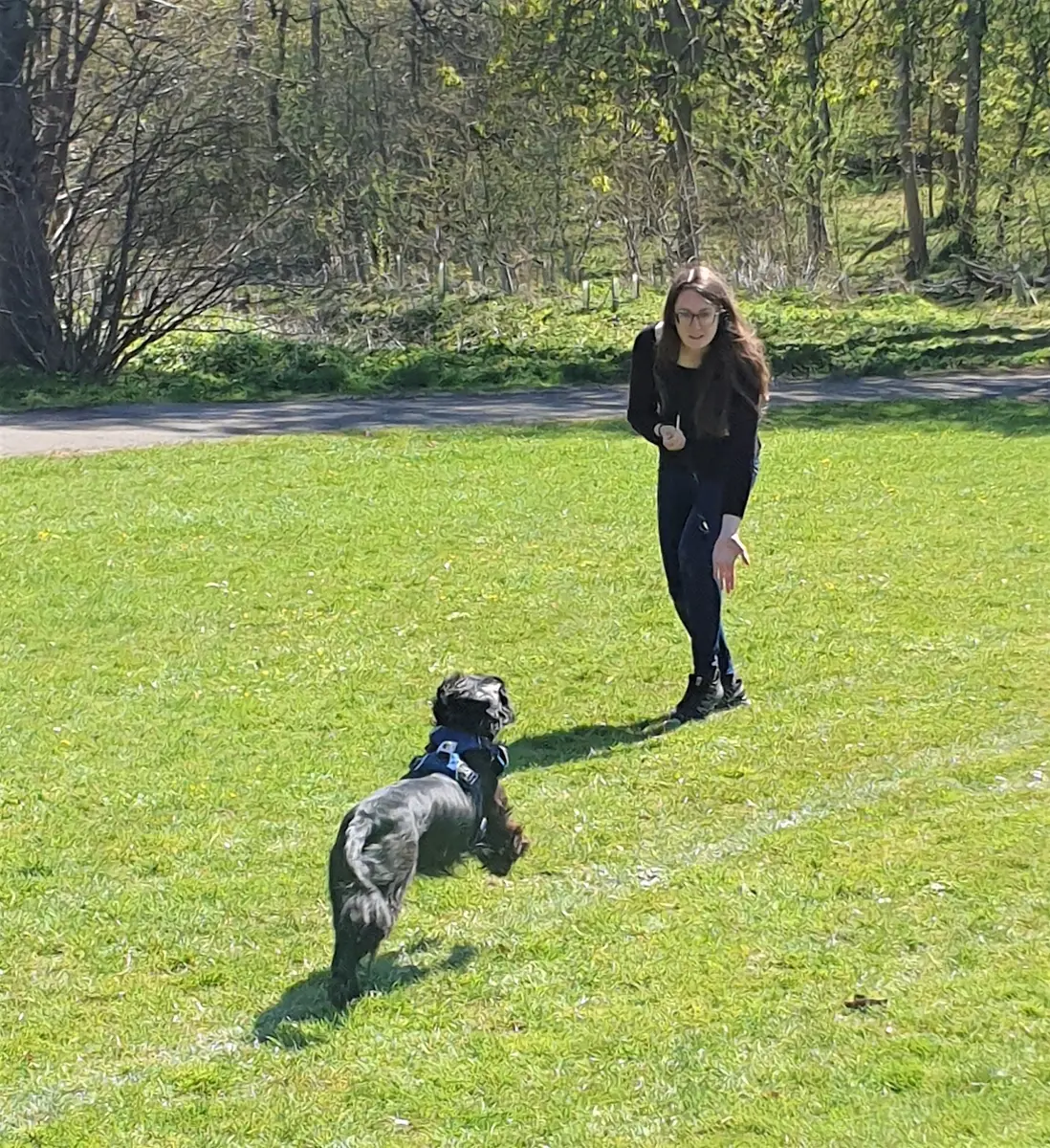
- Now we can start blowing the whistle BEFORE our dog is running towards us.
- Start by saying their name to get their attention, then blow the whistle and reward them when they reach you.
- It is still important that we only blow the whistle when we know they will DEFINITELY come back to us. That is why it is useful to call their name first- if they are too distracted they won’t pay attention and we know this is not a good time to blow the whistle! If they look up when you call their name, blow the whistle and they are more likely to come to you.
Step 4: Proofing
- Repeat steps 1-3 in your garden or a quiet area to begin with.
- Then start introducing the whistle while on walks and in the park.
- Remember, the fastest way to teach your dog to recall to the whistle is to ONLY blow it when you know they are going to listen to you (Dogs Trust, 2019).
- Once your dog has really got the hang of this, you can start blowing the whistle in trickier, more distracting situations.

Whistle Training Tips
- Take it slowly. If your dog is struggling with one of the steps, go back a step or make it easier for them to do what you are asking. Set your dog up for success by only asking them to do things they are able to do (Gutteridge, 2019) The more difficult you make the training, the less likely your dog will perform the desired behaviour, and so the less likely they will learn to do what you want.
- When training, always follow the whistle with a special tasty treat (Hiby et al., 2004). It’s important that these treats are extra special and your only gets them for responding to the whistle. Recall is one of the hardest things for your dog to learn, so offering them amazing rewards for doing it will really help!
- You can get two whistles and get someone to train with you. Take turns blowing your whistle and calling your dog between the two of you.
References
Arhant, C., Bubna-Littitz, H., Bartels, A., Futschik, A. and Troxler, J., 2010. Behaviour of smaller and larger dogs: Effects of training methods, inconsistency of owner behaviour and level of engagement in activities with the dog. Applied Animal Behaviour Science, 123(3-4), pp.131-142.
Dogs Trust, 2019. Teaching your dog to come back when called.
Gutteridge, S. 2019. Canine Communication: The Language of a Species.
Hiby, E.F., Rooney, N.J. and Bradshaw, J.W.S. 2004. ‘Dog Training Methods: their use, effectiveness and interaction with behaviour and welfare’. Animal Welfare 13(1): 63-70.
Wells, D.L., Graham, L. and Hepper, P.G. 2002. ‘The influence of auditory stimulation on the behaviour of dogs housed in a rescue shelter’. Animal Welfare 11(4): 385-393.