Top Tips to BOOST your Dog's Recall!
1. Find your dog’s motivator
There are so many interesting things for your dog to investigate in the park but you need to be the most exciting thing!
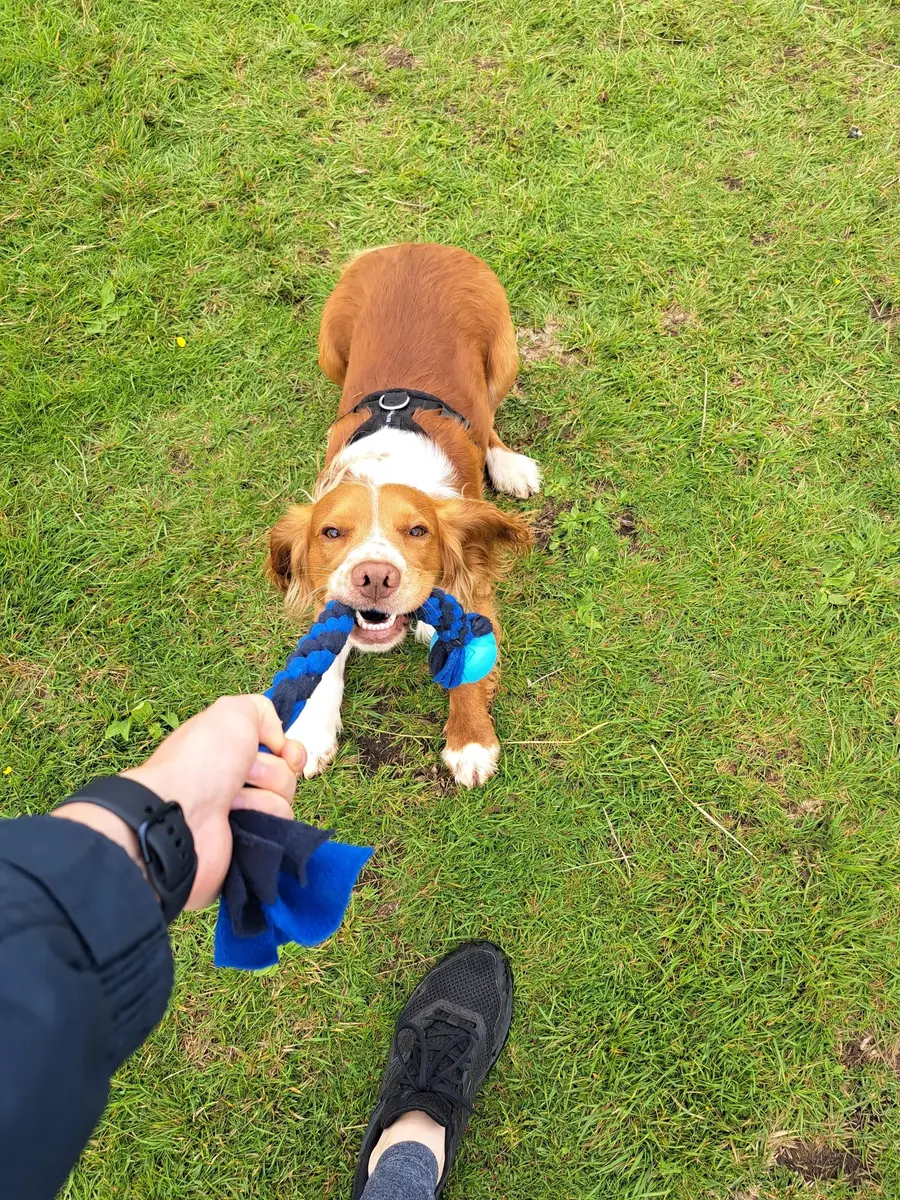
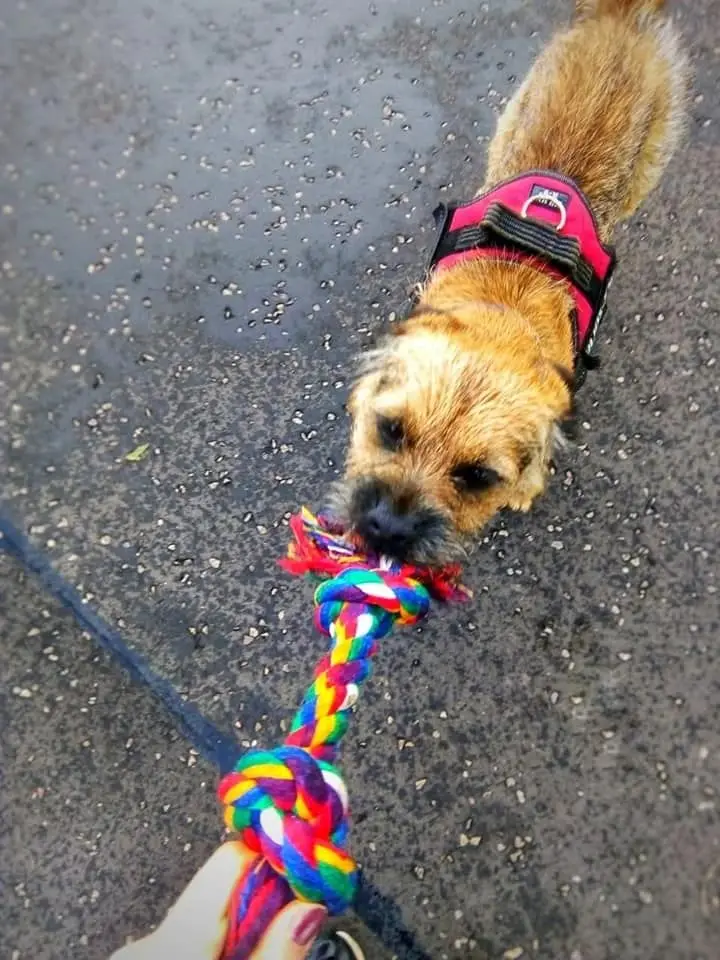
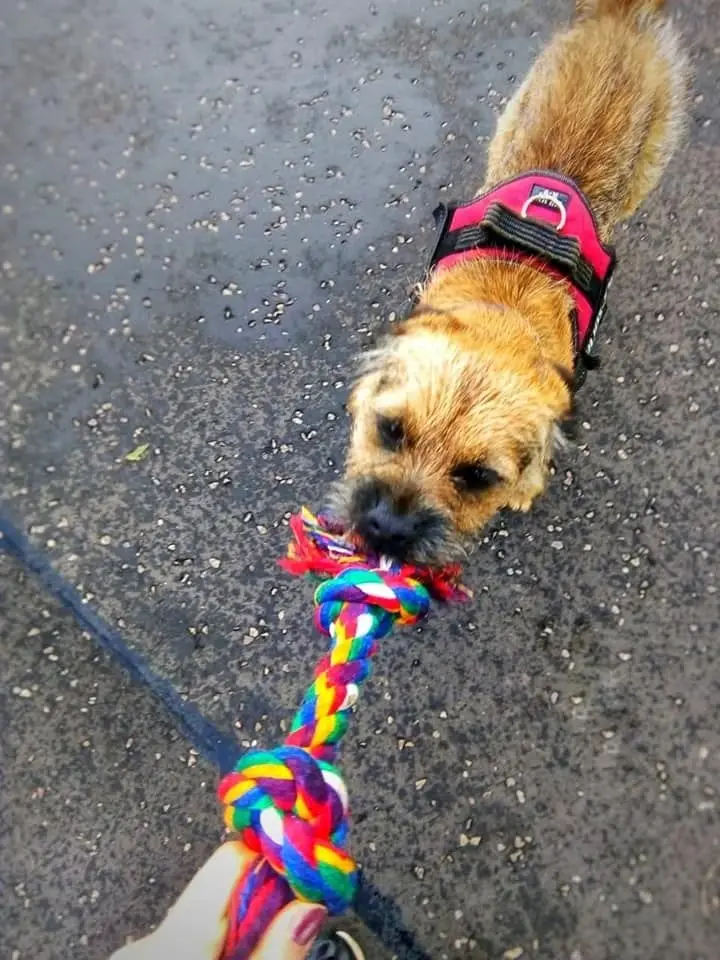
Find out what your dog LOVES and use it to teach their recall!
Try different toys, treats, games… (Hiby ey al., 2004) and once you find that special motivator, keep it special by only using it for recall.
2. Practice without distractions first
The most common mistake people make is calling their dog in a busy park and expecting their dog to be able to come back to them every time. Recall is not natural for our dogs- we need to teach them it!
Start in your house first, then your garden, then a quiet outside area, then gradually build in more and more distractions (Deldalle and Gaunet, 2004).
We want our dogs to succeed (Gutteridge, 2019)! The more times they get the recall right, the more likely it is to become a habit. If your don’t think your dog will come back in the park, don’t let them off the lead yet. Do some more practice in quieter places first.
3. Think about your tone of voice
Often, when our dog is not responding to our recall command we can get frustrated and this can come across in our tone of voice.
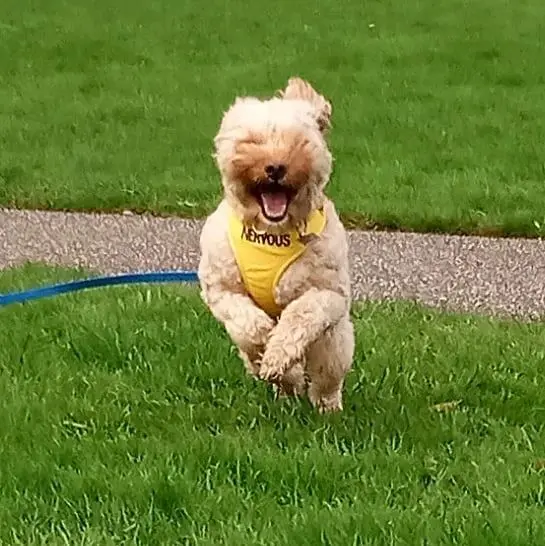
It’s important to maintain a positive, encouraging, enthusiastic tone of voice which your dog will want to respond to (Andics et al., 2016).
A dog will not want to come to someone who is shouting at them!
4. Try running away from your dog!
Often when our dogs aren’t coming back to us, we run after them to try and catch them. Our dogs are always going to be able to outrun us! And it is their natural instinct to run faster if something is chasing them (Davis, 2012). They can also see you chasing them as a game so you are encouraging them to run away from you!
Instead of running after your dog, get your dog to chase you! Call your dog and run away from them. Their instinct will be to chase you!
If your dog is running towards a road or something dangerous, then obviously running after them might be a better option. But if you are just practicing your recall in a safe place, try it out!
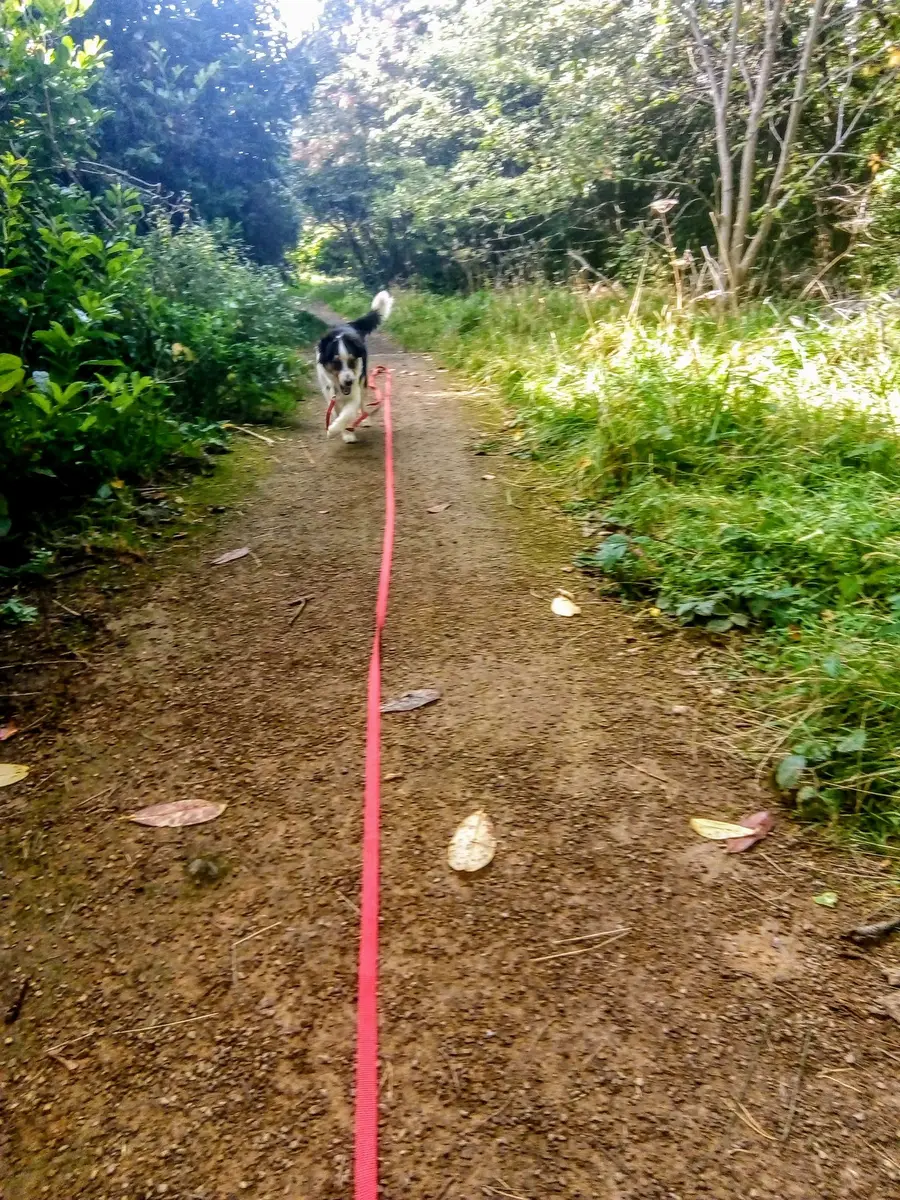
5. Consider using a long line.
Long lines give your dogs a bit more freedom, but they also allow you to have a bit more control.
They are great for practicing recall and testing how your dog will respond in real-life situations in a safer way.
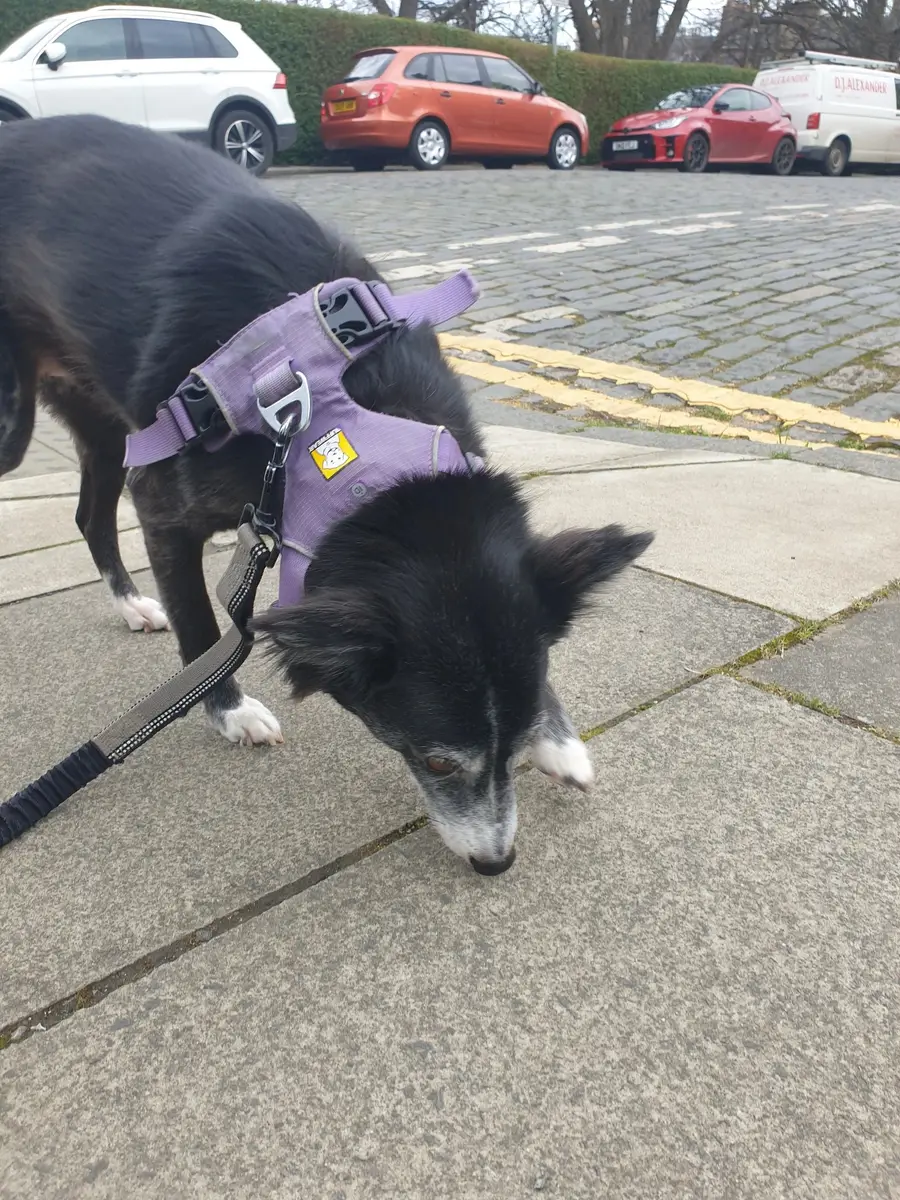
Always use a long line with a harness, never a collar as this can seriously injure your dog’s neck.
References
Andics, A., Gabor, A., Gasci, M., Farago, T., Szabo, D. and Miklosi, A. 2016. ‘Neural mechanisms for lexical processing in dogs’. Science 353(6303): 1030-1032.
Davis, R. 2012. Why dogs do that: a collection of curious canine behaviours. Willow Creek Press.
Deldalle, S. and Gaunet, F. 2014. ‘Effects of 2 training methods on stress-related behaviours of the dog (Canis familiaris) and on the dog-owner relationship.’. Journal of Veterinary Behaviour 9(2): 58-65.
Gutteridge, S. 2019. Canine Communication: The Language of a Species.
Hiby, E.F., Rooney, N.J. and Bradshaw, J.W.S. 2004. ‘Dog Training Methods: their use, effectiveness and interaction with behaviour and welfare’. Animal Welfare 13(1): 63-70.