How to Tell If Your Dog is Calm

Our dog’s body language can tell us a lot about how they are feeling. It is crucial to be able to read your own dog’s signals so you can prevent issues arising and ensure they are happy.
It is important for dogs to have periods of calm throughout the day so they can recharge their batteries and learn to relax on their own. Some dogs find this harder than others!
The first step to encouraging calmness is to be able to tell when your dog is calm, so here are some key signals to look for…
1. Soft Gaze
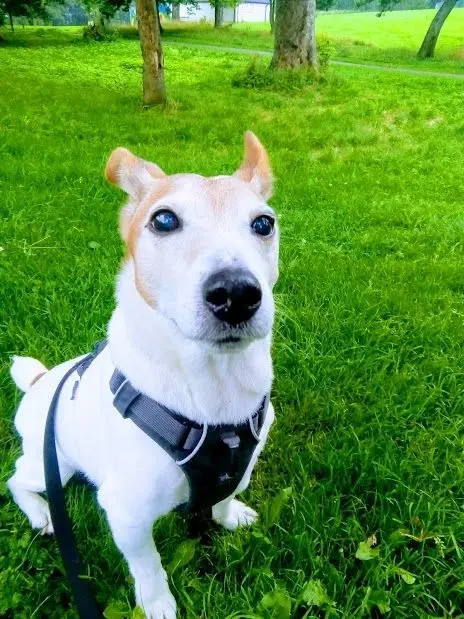
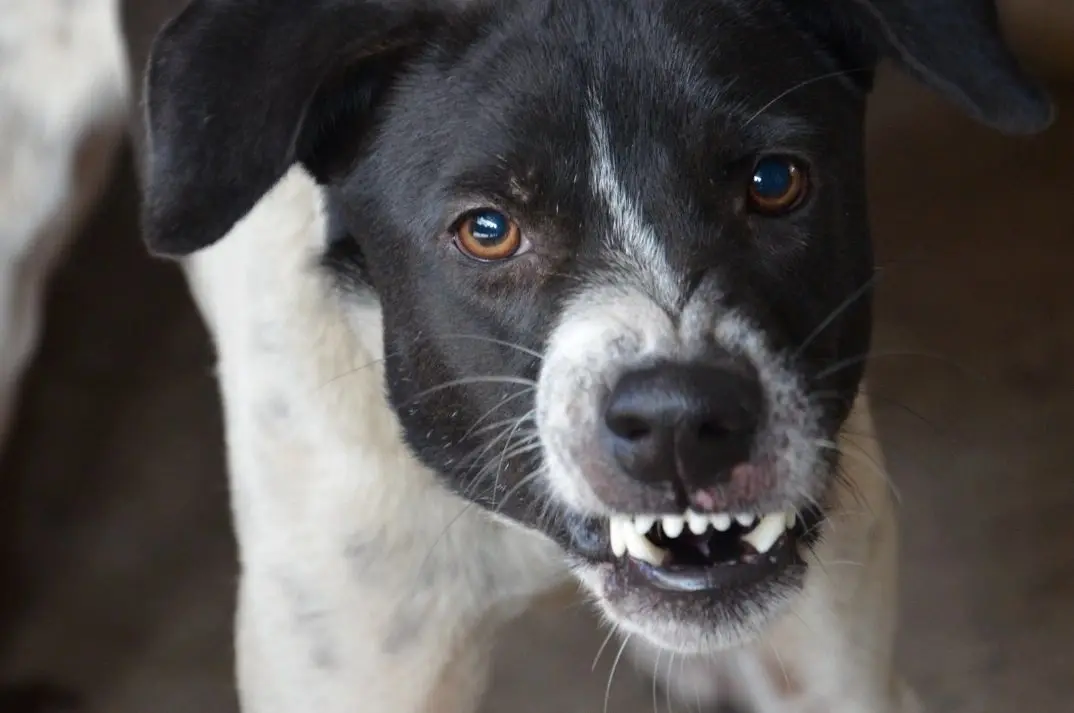
A calm dog will either have their eyes closed if they are relaxing or sleeping, or they will have a soft gaze.
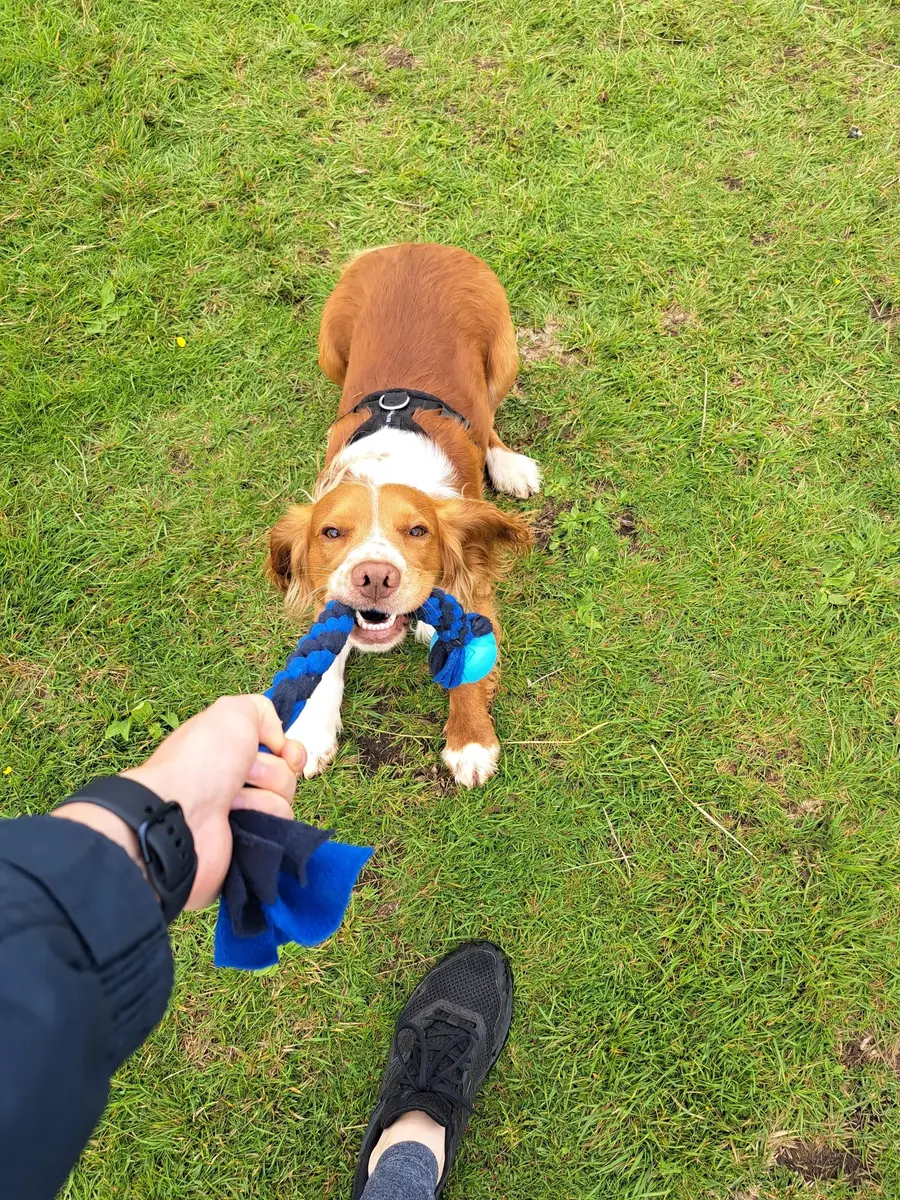
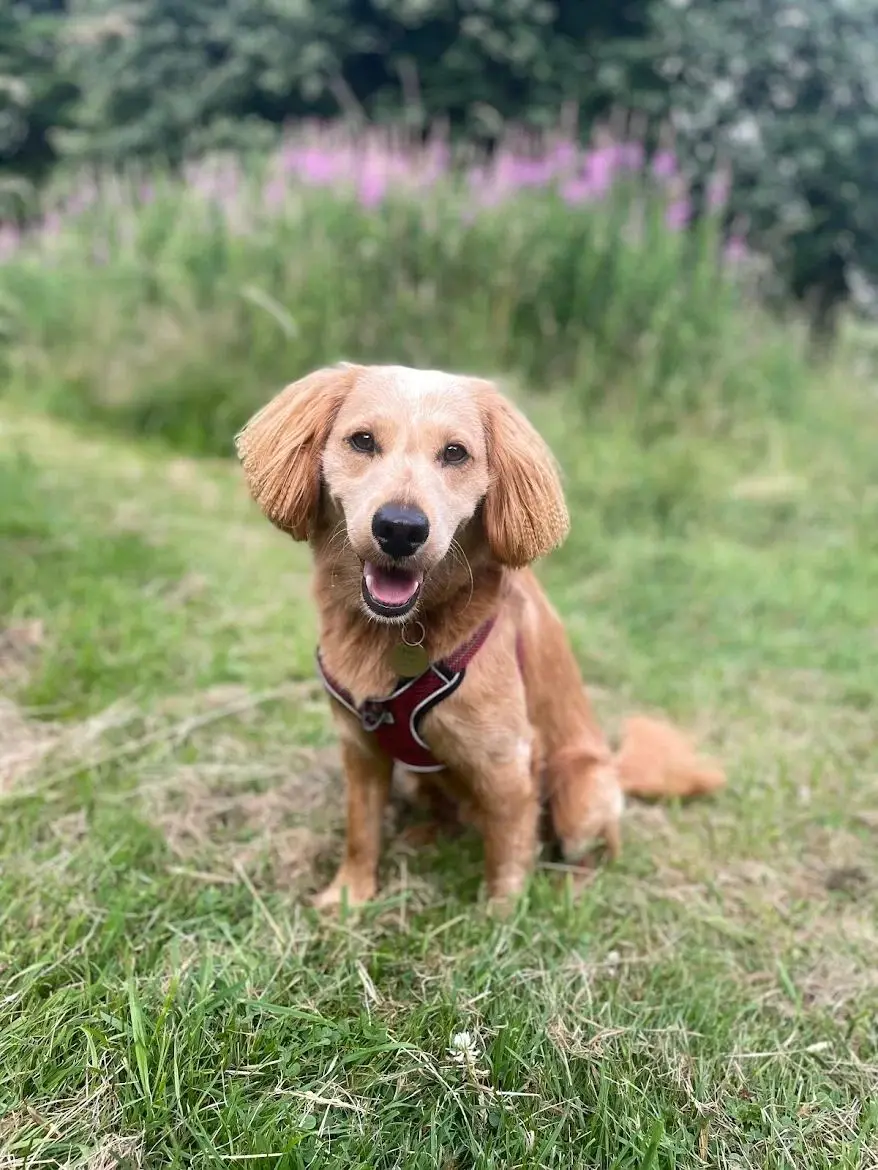
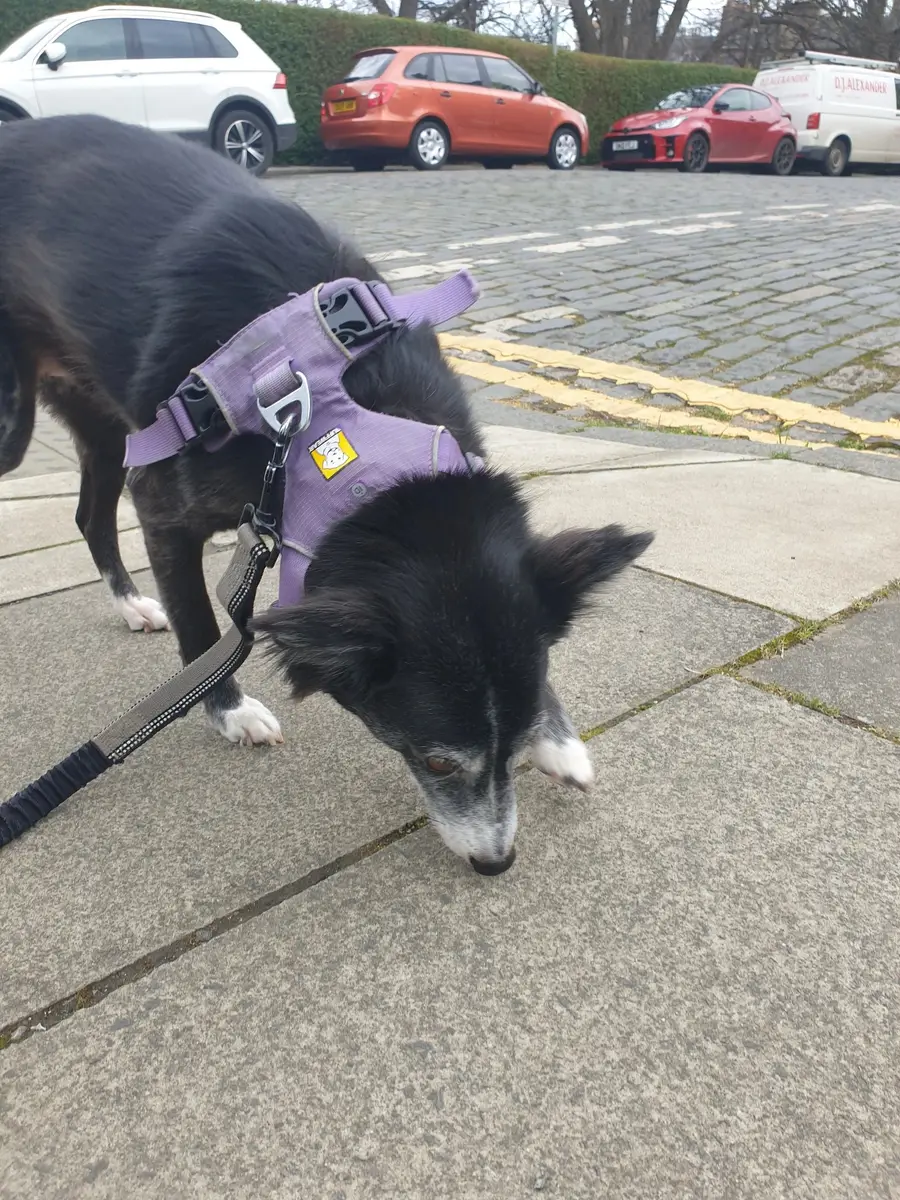
Look at the images of these two dogs. One has a relaxed soft gaze, the other is staring.

2. Relaxed Ears
Ears will usually be loose and relaxed. This can be a very subtle movement, especially in dogs with pointy ears, so watch closely.
3. Relaxed Tail
Tail should be relaxed and loose. It might sway slightly, but not wagging intensely. If your dog doesn’t have a tail, look at their wee stub. This will be harder to read but might give you some indication.
4. Loose Body
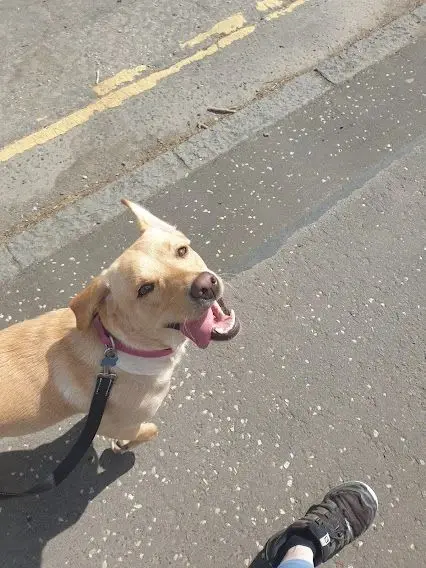
Calm dogs usually have a generally loose body and their posture is relaxed. They are not stiff and holding tension in their muscles.
Look at these two images. In one the dog has loose body language, the other shows a dog with stiff body language.
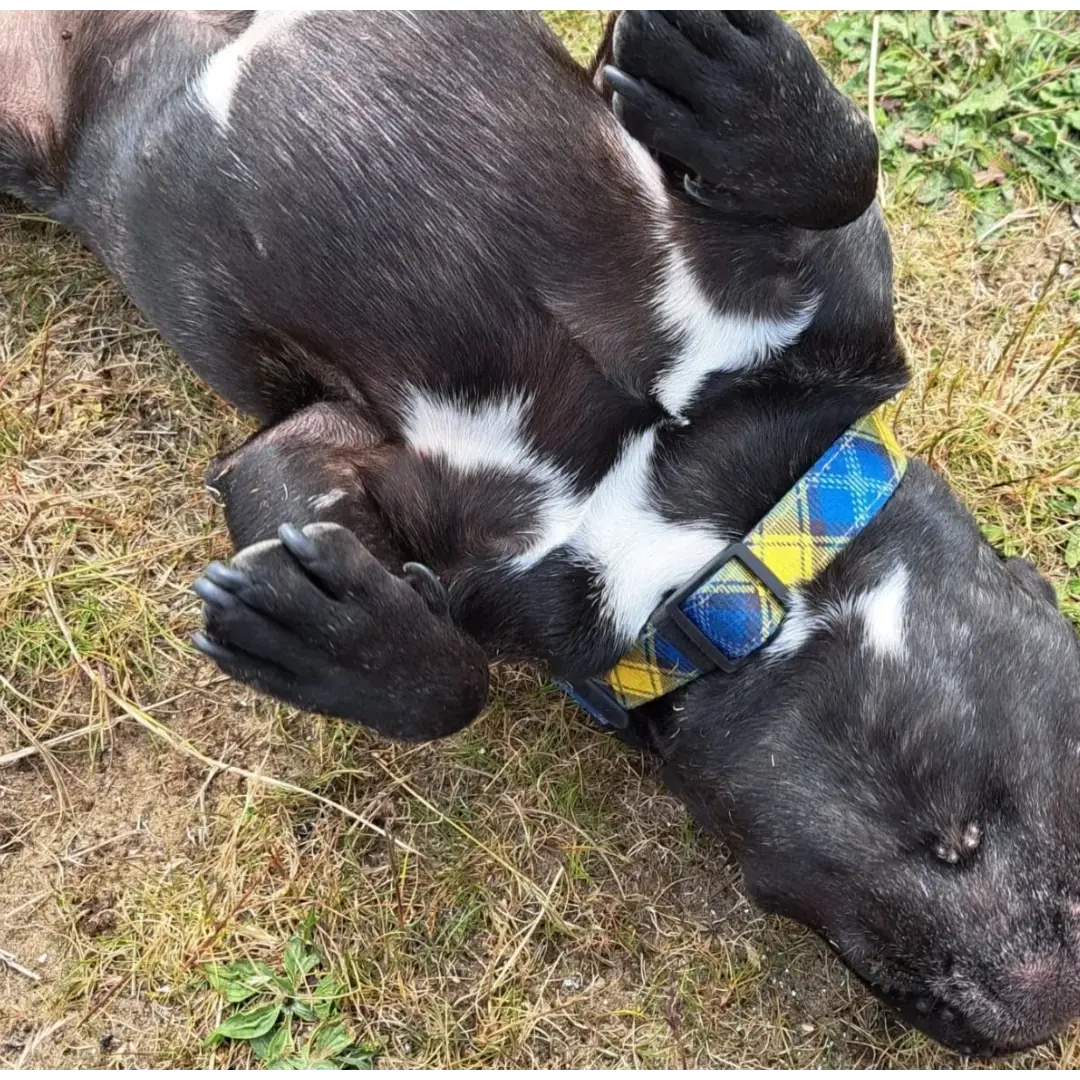
5. Showing Tummy?
This is the most misunderstood signal dogs give.
In some cases it can mean they are relaxed, but in other cases it can be an appeasement signal where they are trying to diffuse a situation they find stressful.
For example, a dog lying on the sofa showing their tummy to someone they trust is probably relaxed. However, a dog who shows their tummy to a stranger who has approached them in the park may be feeling anxiety and using this as a de-escalation technique.
Remember, every dog is different so make sure you understand your own dog’s unique signals.
A good way to do this is to take videos of your dog and watch them back. This gives you more time to assess each individual element of your dog’s body language which can be difficult to assess at the time.
Look out for my next blog post on easy ways to encourage calmness in your dog.
Sign up for it here
And follow me on social media for more information and training tips.
This month is all about calmness!
References
Gutteridge, S. 2019. Canine Communication: The Language of a Species.
PDSA: https://www.pdsa.org.uk/pet-help-and-advice/looking-after-your-pet/puppies-dogs/canine-body-language
Shepherd, K. 2009. ‘Ladder of aggression’. BSAVA Manual of Canine and Feline Behavioural Medicine 13-16.
Victoria Stilwell: https://positively.com/dog-training/understanding-dogs/canine-body-language/