How to Teach Your Dog Loose Lead Walking
1. Think about your equipment.
Using the right equipment can make a big difference to your training (RSPCA, 2021)!
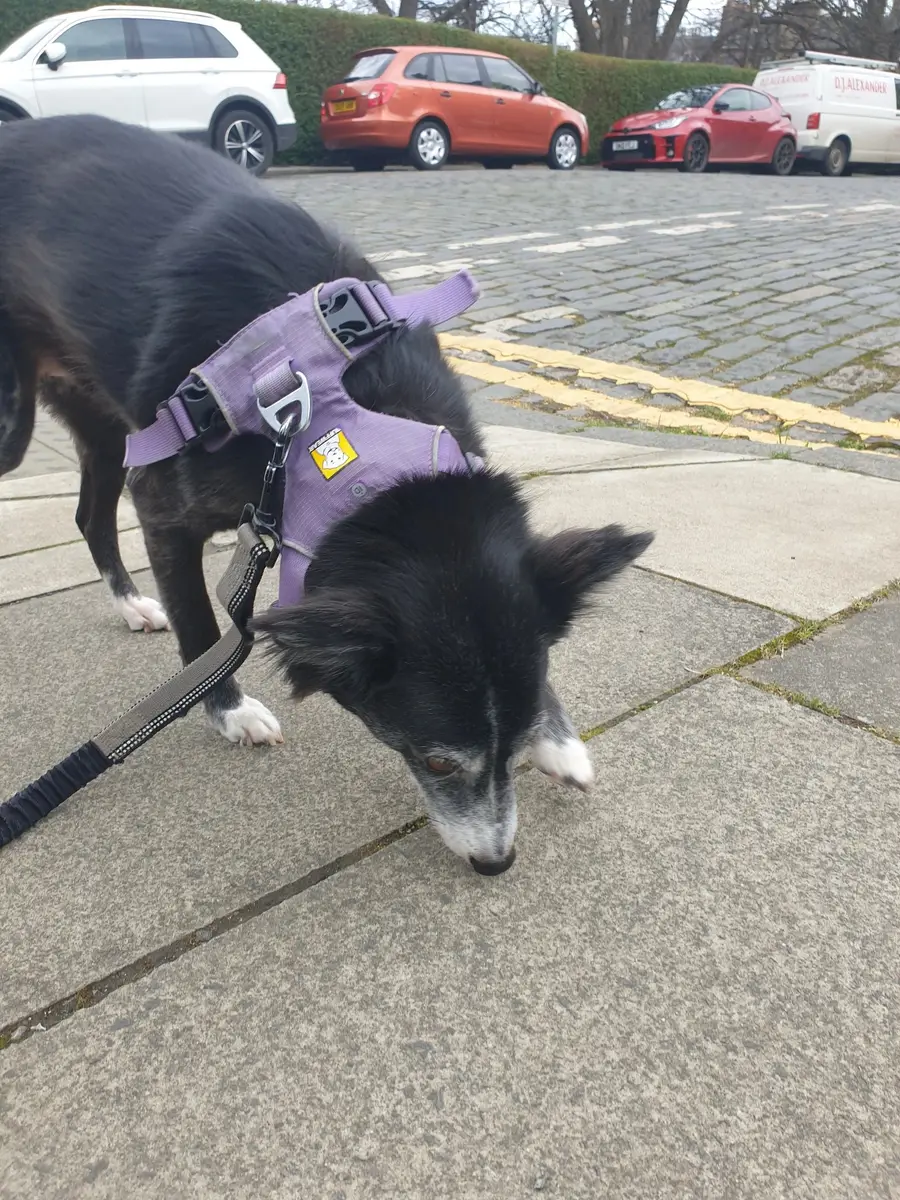
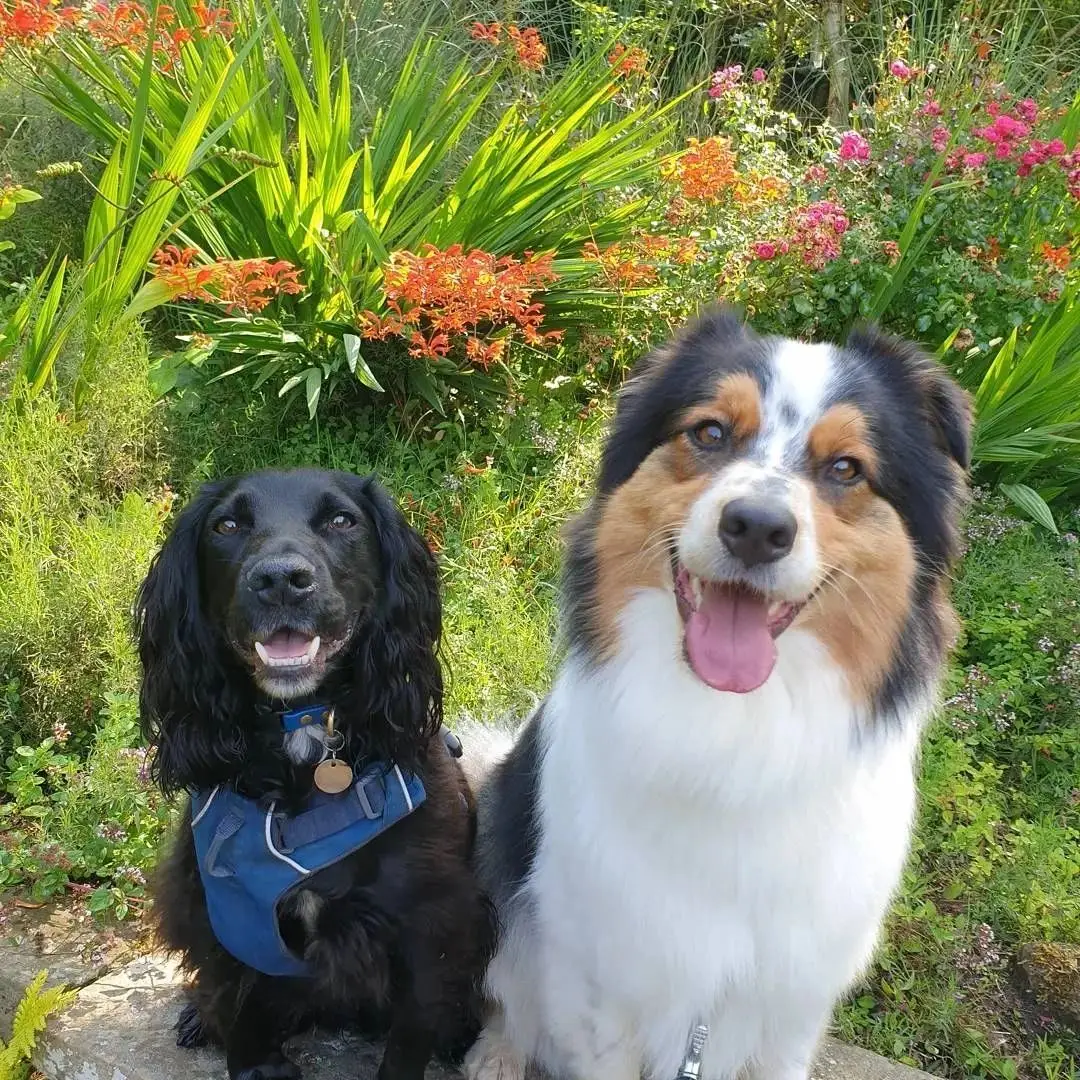
I recommend using a Y-shaped harness with a front and back clip. Use it with a double ended lead so you can clip one end to the front of the harness, and the other end to the back.
Harnesses are the most comfortable and safest way to walk your dog.
2. Think about location.
We want to set our dogs up for success (Gutteridge, 2019), so pick a low distraction environment to practice your loose lead walking.
Start by teaching your dog in your house, then in your garden, then in quiet streets. Gradually increase the distractions over a long period of time.
3. Hold the treats next to your dog.
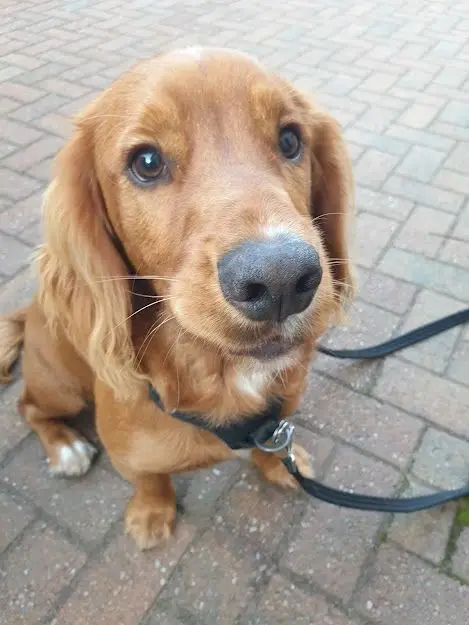
Lure your dog to your side (it doesn’t matter which side!) with treats (Battersea, n.d.).
Then, hold the treats in the hand next to your dog and the lead in your other hand. This will prevent your dog crossing over in front of you to get to the treats. Your dog will naturally be more likely to walk at the side with the treats.
Start with your treat hand low in front of your dog’s nose. Walk a few steps and reward your dog with a treat.
After a few repetitions, raise your hand slightly. If your dog jumps at you, ignore them and don’t give them the treat. Whenever they walk nicely, reward them.
4. Increase time between treats
To start with, you will need to reward your dog with a treat every few steps. As your dog gets the hang of what you want from them, you can start increasing this to a few extra steps before you treat them (Dogs Trust, 2019).
A common problem people have at this stage is that their dog will take the treat then pull ahead! Have a handful of treats ready and the moment you give your dog a treat, show them the next one is ready before they start pulling!
5. If your dog pulls…
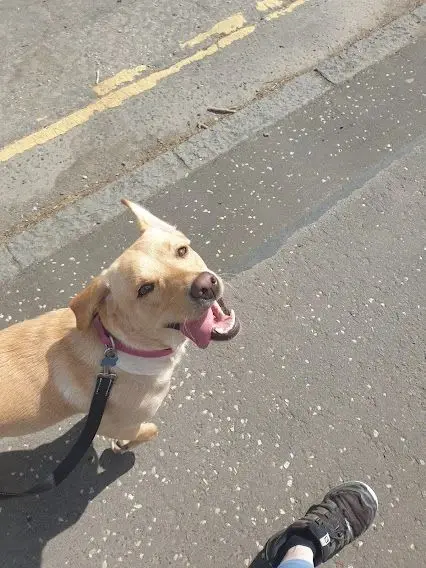
We are trying to prevent your dog from pulling in the first place (Hiby et al., 2004), but there will be times when they will pull. Maybe there is an interesting smell or a leaf blows in front of them!
The moment your dog pulls, stop where you are. Call their name and encourage them to come back to your side (Battersea, n.d.). Be patient, it can be a while to get their attention back on you! Reset the training, and try again.
If your dog is pulling too often, take a step back in training. Go to a quieter place to practice or reward them more frequently for getting it right.
Loose lead walking is one of the hardest things to teach our dogs, so be patient and consistent and they will get there!
References
Battersea, n.d. ‘How to teach your dog to walk on a lead’. https://www.battersea.org.uk/pet-advice/dog-advice/how-teach-your-dog-walk-lead
Dogs Trust, 2019. ‘Walking Nicely on Lead’ https://www.dogstrust.org.uk/help-advice/training/training-factsheets/walking%20nicely%20on%20lead.pdf
Gutteridge, S. 2019. Canine Communication: The Language of a Species.
Hiby, E.F., Rooney, N.J. and Bradshaw, J.W.S. 2004. ‘Dog Training Methods: their use, effectiveness and interaction with behaviour and welfare’. Animal Welfare 13(1): 63-70.
RSPCA, 2021. ‘What equipment should I use when teaching my dog or puppy to walk on a lead?’ https://kb.rspca.org.au/knowledge-base/what-equipment-should-i-use-when-teaching-my-dog-or-puppy-to-walk-on-a-lead/