Doggy Anxiety: How Do I Spot It?

Dog’s suffer from anxiety, just like us. Anxiety can have many causes and dogs can display it in many different ways. It is crucial to have an understanding of what anxiety looks like in your own dog so you can address any underlying issues before they become serious behavioural problems.
What is Doggy Anxiety?
Anxiety in dogs is similar to anxiety in humans in that it is a physical stress response. Stress is the most common mental health issue in dogs, with one study claiming over 70% of domestic dogs in Finland display anxiety (Salonen et al., 2020).
A small amount of short-term stress is normal, however long-term stress impacts both physical and mental health in dogs, and can result in behavioural issues.
Every dog is different but causes of anxiety can include being left alone when they are not used to it, other dogs, strangers, new environments and noises (such as fireworks).
How Do I Know if My Dog is Anxious?
How anxiety is displayed differs between dogs, so it is important to know what your dog’s appearance, mannerisms and behaviours are like when they are feeling normal. Then when you spot changes in these, you will know there is something else going on.
Common signs of anxiety include tail tucked between legs, ears back, avoiding situations/people/dogs, loss of appetite, unable to sleep/settle and pacing.
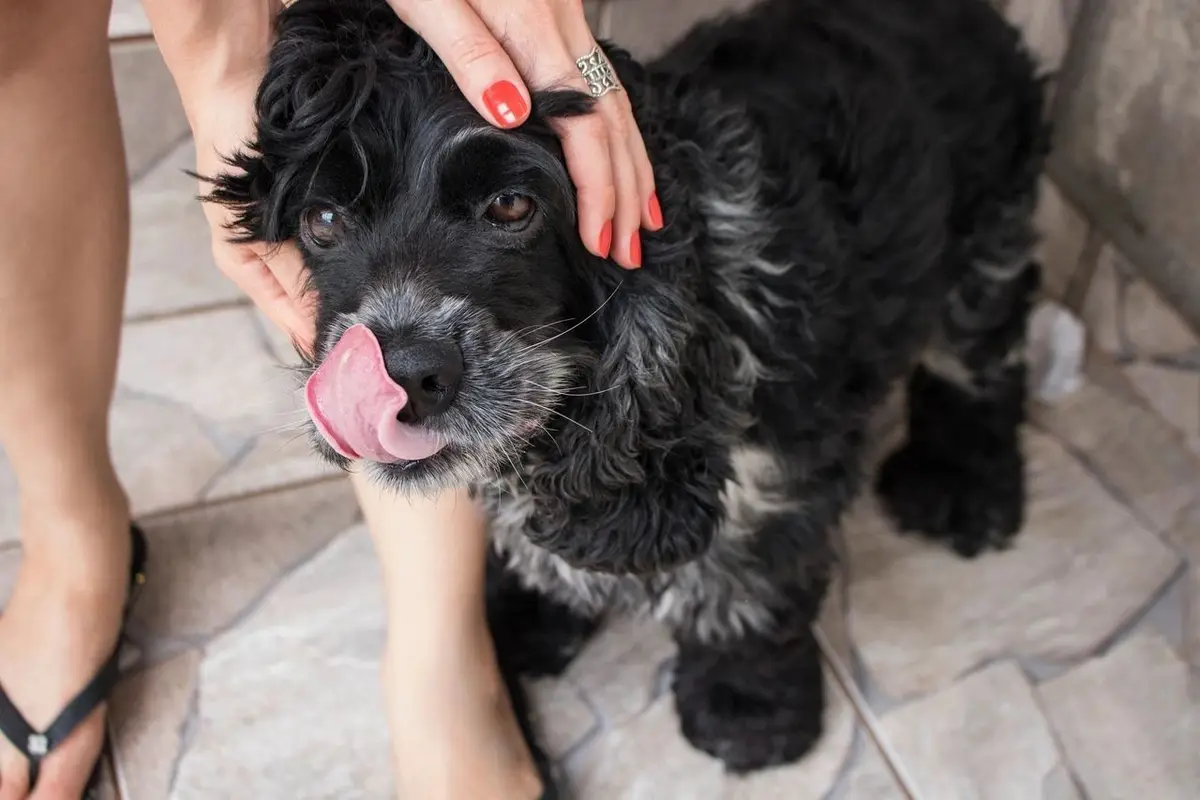
This is a stock image of someone petting a dog. However, the way the dog is licking his nose shows they are uncomfortable with the situation.
Why is it Important?
It is important to understand anxiety and help to reduce it in our dogs for health and behavioural reasons.
Dogs who are in a constant state of stress will suffer health problems in the long term.
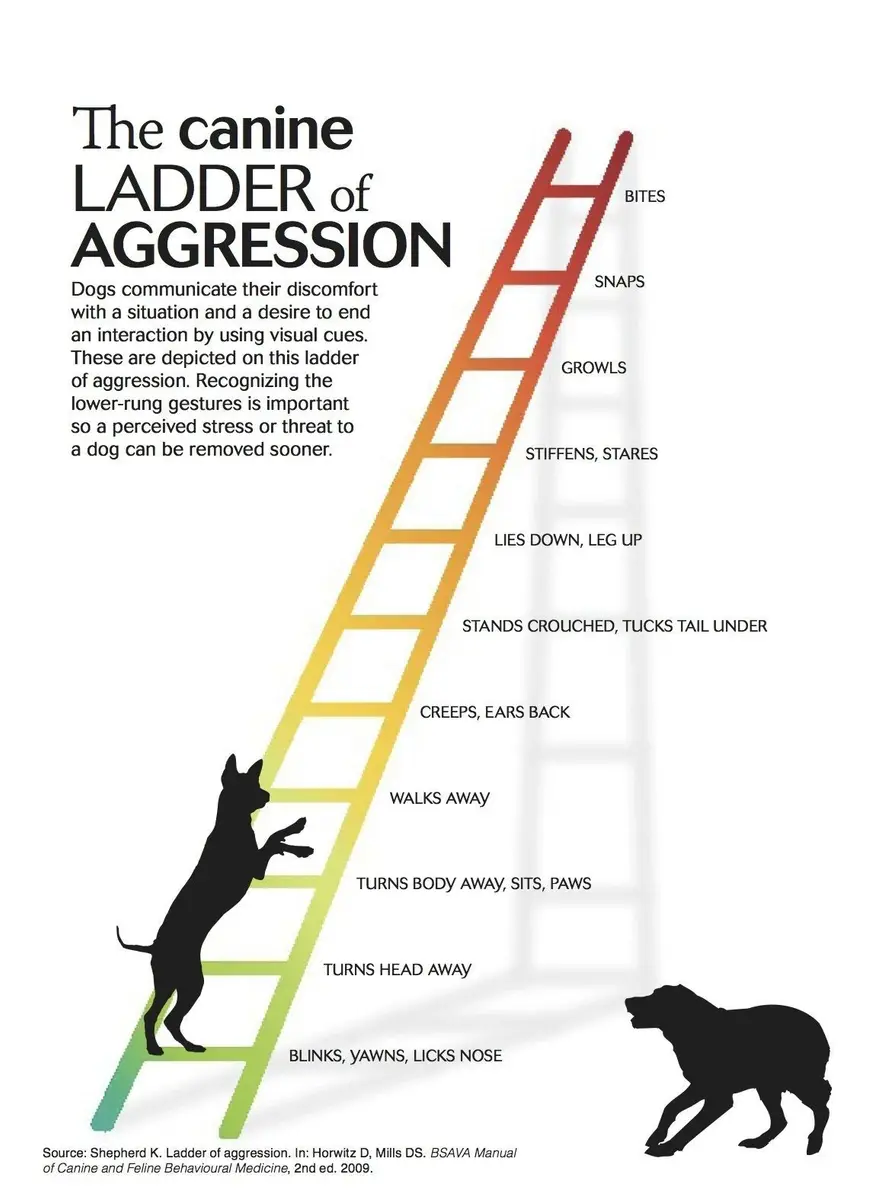
Behaviourally, anxiety and aggression are closely linked. The Ladder of Aggression (see below) shows how anxiety can escalate to aggression if dogs are not able to leave a situation in which they feel uncomfortable.
Start paying more attention to your dog’s body language so you can spot signs of anxiety early and prevent them from needing to escalate their behaviour.
Look out for my next blog post on easy ways to reduce anxiety.
CLICK HERE TO SIGN UP SO YOU DON’T MISS IT!
References
American Kennel Club: https://www.akc.org/expert-advice/health/treating-dog-anxiety/#:~:text=Dog%20anxiety%20can%20affect%20all,to%20behavioral%20and%20other%20issues.
Dogs Trust: https://www.dogstrust.org.uk/help-advice/behaviour/signs-your-dog-may-be-stressed
Mariti, C., Falaschi, C., Zilocchi, M., Fatjo, J., Sighieri, C., Ogi, A. and Gazzano, A. 2017. ‘Analysis of the intraspecific visual communication in the domestic dog (Canis familiaris): A pilot study on the case of calming signals’. Journal of Veterinary Behaviour 18: 49-55.
Salonen, M., Sulkama, S., Mikkola, S. Puurunen, J., Hakanen, E., Tiira, K., Araujo, C. and Lohi, H. 2020. ‘Prevalence, comorbidity, and breed differences in canine anxiety in 13,700 Finnish pet dogs’. Scientific Reports 10: 2962.