Canine Ladder of Aggression
I always have this ladder in my head whenever I am with a dog.
There is no such thing as ‘dogs who bite’ and ‘dogs who don’t bite’. Any dog can bite if put in the wrong situation (Shepherd, 2009).
It’s just like people! I am not an aggressive person, but if someone is attacking me, I will fight back. Dogs are just the same.
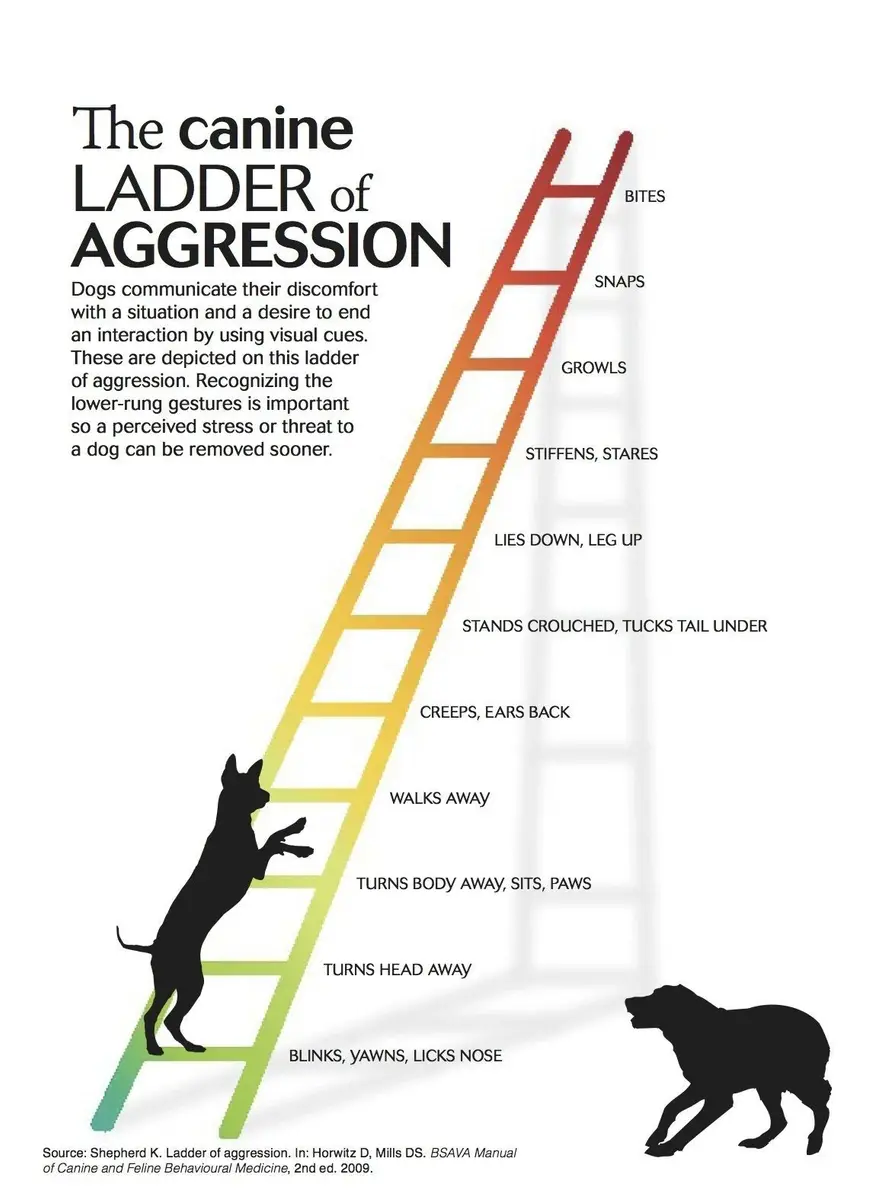
This ladder shows all the signs dogs go through before they bite. Not all dogs will show all of these signs, but by learning to recognise the early signs at the bottom of the ladder, we can remove a dog from an uncomfortable situation before things escalate and they feel they have no option left but to bite.
The Steps
The ladder starts with quite subtle signals, which are often misinterpreted. It is true that sometimes our dog might be yawning because they are tired, but it may be that they are stressed. It is important to look at the context (Demirbas et al., 2016). If a young child is approaching them and they yawn, that is probably a sign they are feeling anxious about the situation!
The ladder then progresses to more obvious signs that the dog wants to leave the situation. For example, turning away or even walking away. If your dog wants to leave a situation, let them!
Lying down displaying their tummy is towards the top of the ladder. This is often misinterpreted as the dog wanting a tummy rub. In some cases, a dog may have learned to ask for a tummy rub by doing this. However, in other circumstances, the dog may be anxious and displaying their tummy is a way of saying ‘don’t hurt me, I come in peace!’ In that case, it is much better for you to give the dog space, rather than scratching their belly (PDSA).
If the situation continues, your dog will start to display more obvious signs of aggression, such as staring, snarling and growling. These are your final warnings to back off!
Finally, there is biting, right at the top of the ladder. Look how many steps there are in this ladder as your dog tries to communicate with you!
Where is this Dog on the Ladder?
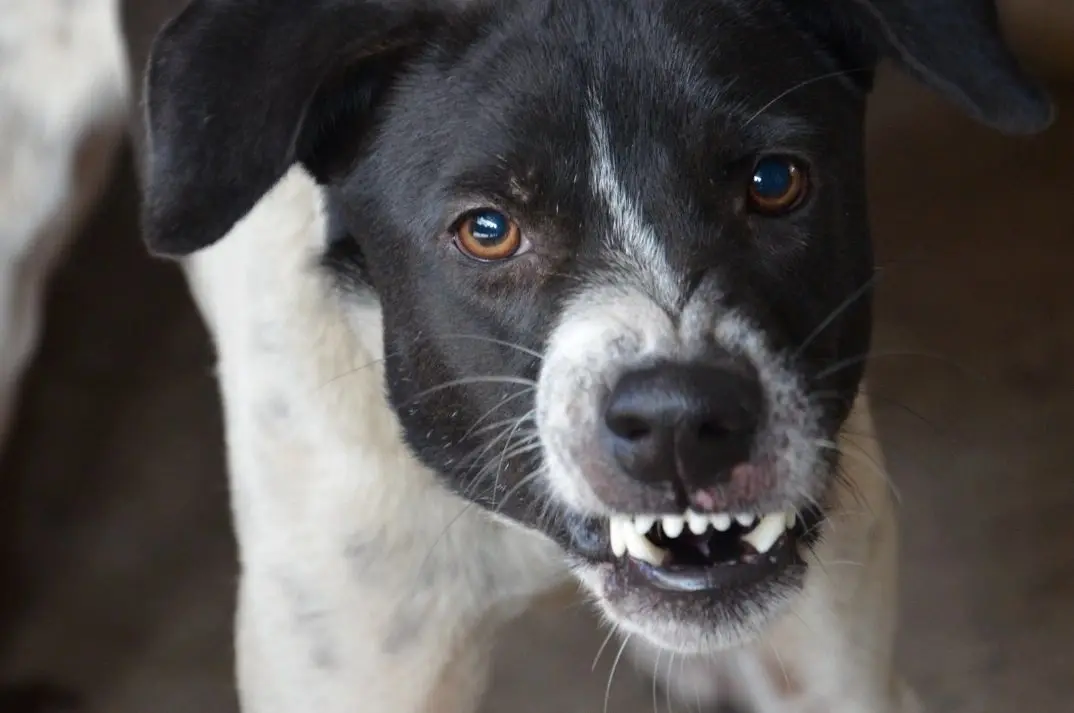
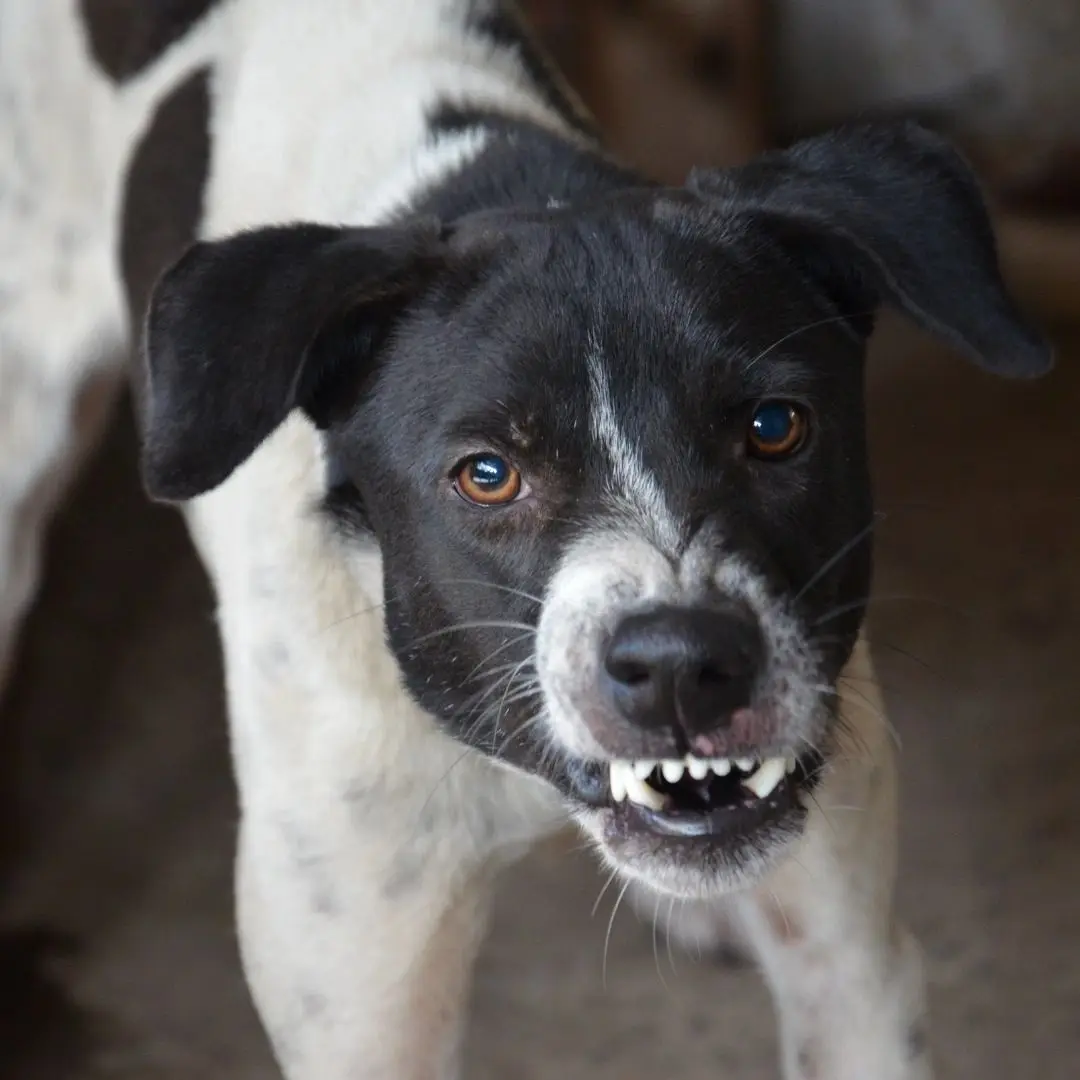
This is a stock photo, not one I have taken. I would never have stopped to take a photo of this dog, but would have walked calmly away immediately!
This dog is clearly unhappy. Its lips are pulled back, displaying its teeth in a threatening gesture (PDSA). This dog is saying ‘back off or I will have no option but to attack’.
This is not a ‘bad’ dog. They are simply communicating that they need space, which is completely fine.
If I was working with this dog, I would be thinking about why this dog is anxious and why they felt they needed space. Then I would help to gradually de-sensitise them to their triggers, working at their own pace, without pushing them to this stage.
Where is this Dog on the Ladder?
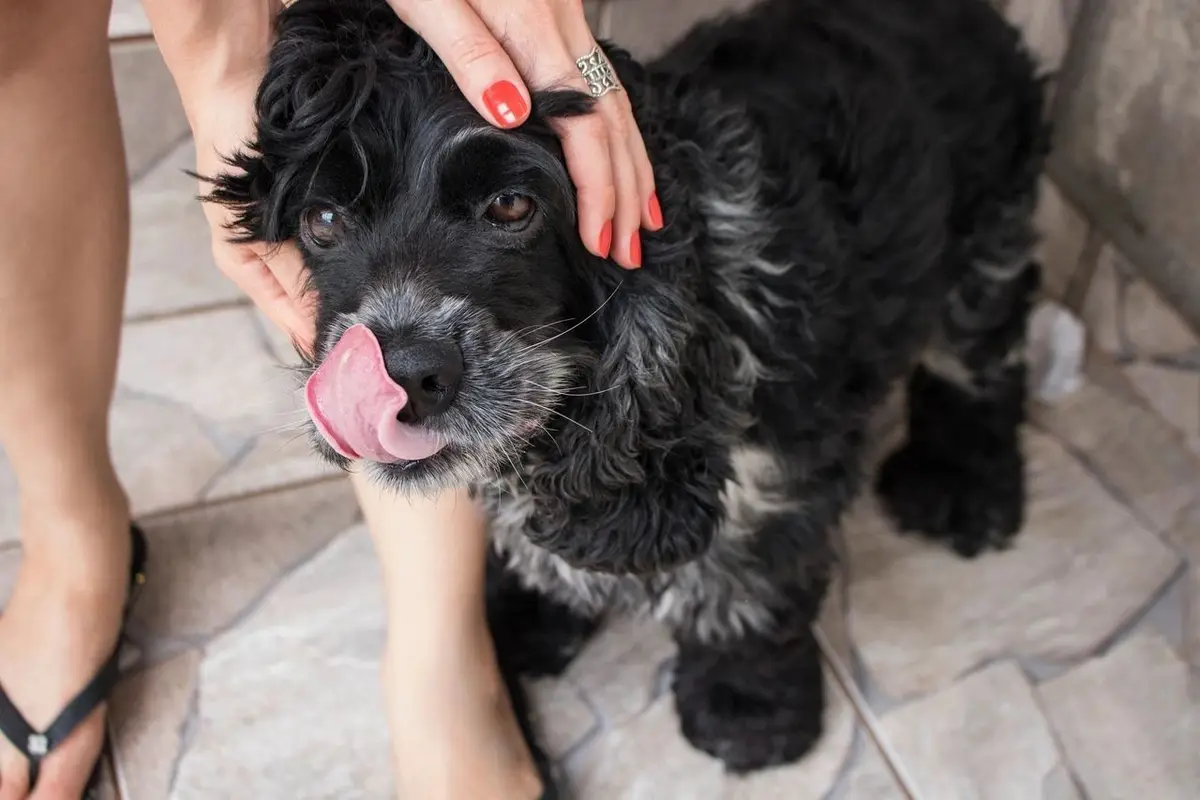
This is also a stock photo.
This is a much more subtle sign of a dog feeling anxious. They are licking their lips and because of the context, I would presume it is because of anxiety (PDSA). A lady is leaning over the dog, holding their head, and this dog is not comfortable with it.
This is a very common sight, but I wish people would be a little more considerate and aware of when dogs are trying to communicate with them (Demirbas et al., 2016).
This dog is right at the bottom of the ladder of aggression for now, but if the lady was to continue making the dog feel uncomfortable, he would progress up the ladder, showing more and more signs of discomfort.
As a general rule, allow dogs to come to you for pats, rather than you forcing your pats on them! This gives dogs a sense of control and will encourage trust (Haug, 2008). I don’t want to be touched by strangers without my consent, so is it so surprising that our dogs might not want that either!?
Using the Ladder in Real Life
Not all dogs will show all the signs exactly like that, in that particular order.
Some dogs may have learned that certain behaviours aren’t picked up on by their owners, so they stop using them. Or perhaps they have been told off for growling in the past so they skip that step and go straight from staring to biting, which is much more dangerous! If your dog is growling, they are communicating. We should respect this and give them the space they need.
Learn to recognise your own dog’s signs of discomfort so you can prevent them from needing to move up this ladder (Greenfield, 2013).
You can also use this when you or your dog are interacting with other dogs. If you spot a dog who is displaying any of these signals when you approach, back off and give them space!
References
Demirbas, Y.S., Ozturk, H., Emre, B., Kockaya, M., Ozvardar, T. and Scott, A. 2016. ‘Adults’ ability to interpret canine body language during a dog-child interaction’. Anthrozoos 29(4): 581-596.
Greenfield, S. 2013. ‘How to Recognise Fear in Canine Inpatients’. The Veterinary Nurse 4(3): 150-155.
Haug, L.I. 2008. ‘Canine aggression towards unfamiliar people and dogs’. Veterinary Clinics of North America: Small Animal Practice 38(5): 1023-1041.
PDSA. ‘Canine Communication: recognising stress in your dog’. Available at: https://www.pdsa.org.uk/pet-help-and-advice/looking-after-your-pet/puppies-dogs/canine-ladder-of-communication
Shepherd, K. 2009. ‘Ladder of Aggression’. BSAVA Manual of Canine and Feline Behavioural Medicine pp.13-16.