Best Dog Leads
There are so many options when choosing a dog lead, but it is important to consider what you want from a lead so you can choose the best one for you and your dog.
Here is a list of popular types of leads and when it is best to use them.
1. Standard Lead
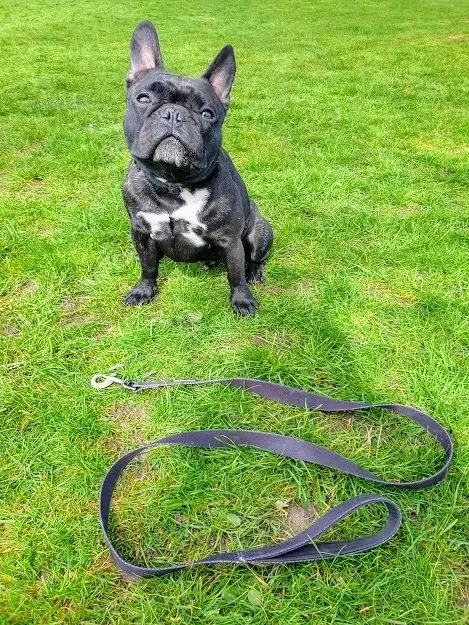
This lead is what I see most often! It is usually made of fabric and clips onto your dog’s collar (or harness) at one end and has a fabric loop for a handle at the other end. These leads are simple and practical. Ideal for your everyday dog walks.
2. Slip Lead
Slip leads have a loop at one end which goes around your dog’s neck and tightens whenever they pull. The advantage of these is that it doesn’t attach to your dog’s collar, so if your dog is anxious or doesn’t like their collar being touched, this can be a good solution. I always keep one in my backpack when I am on walks in case I find a lost dog. It allows me to easily slip it round the dog’s neck whether they are wearing a collar or not.
However, these leads can cause discomfort for your dog. The loop around their neck tightens whenever they pull so it can damage their neck. While these leads are fine to use in some circumstances and for short periods, they should not be used for long walks. It is much better to use a lead which clips onto their collar or harness.
3. Extendable Lead
Extendable leads are so common but they have a lot of problems! They do allow your dog to walk more freely and give them more space to roam (especially if their recall is not good). They can also be good for anxious dogs who benefit from having the ability to take themselves to safety, rather than being restricted by a standard lead.
However, extendable leads actually teach your dog to pull on the lead. Whenever they pull, they get more lead. So, they are learning to pull. This will make it difficult to teach your dog to walk nicely on the lead as they will get accustomed to pulling and walking ahead. Pulling is being rewarded with more lead.
Secondly, they don’t give you much control over your dog. With a standard lead you are able to quickly restrict their movement and move them in another direction. However, the extendable lead does not allow this.
Lastly, they can snap. Due to the strain of the dog pulling on the lead, extendable leads are more likely to break than standard leads.
In some circumstances, extendable leads can benefit your dog. However, for most dogs another lead is a much better option.
4. Double Ended Dog Leads
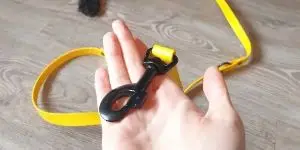
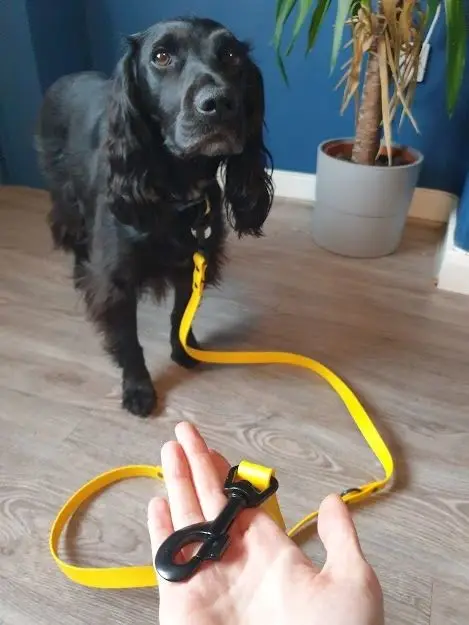
This is my favourite type of lead! It has a clip at each end of the lead and usually 3 metal loops along the lead. This allows you to clip one end to your dog’s collar/harness, and the other end to suit the length you need.
It gives you all the control of a standard lead, but the options for different lengths give you the benefits of an extendable lead, without any of the drawbacks.
5. Long line
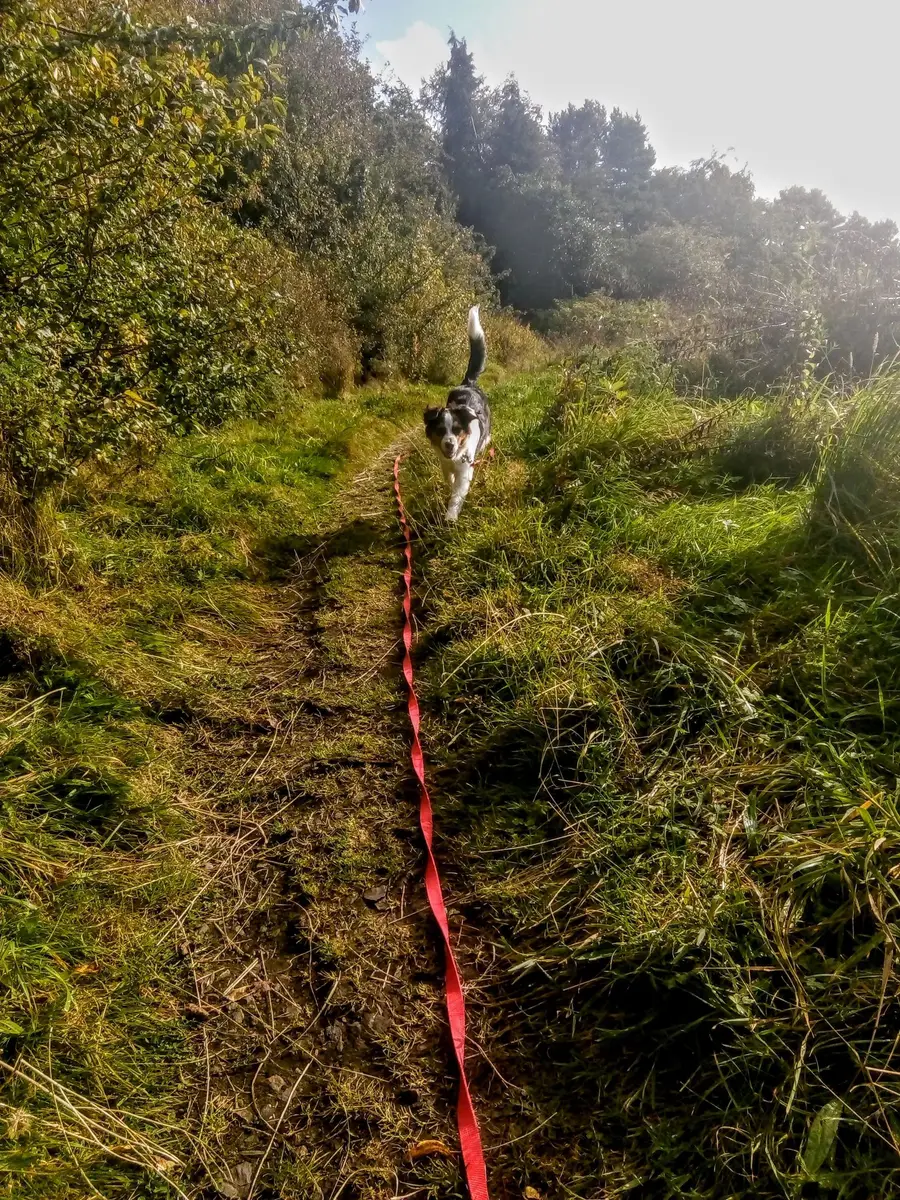
I highly recommend a long line for most dogs. It is a great way of training recall and gives you the security of a lead while your dog gets the freedom and space to run that they need.
Long lines are really flexible. You can get them in a variety of lengths to suit your needs. You can hold one end while your dog is on it, or you can drop it and let the lead trail on the ground. Then you can pick up the lead or stand on it when you need to.
Summary
Think about your dog and what lead is best for them. Changing the equipment you use can change your dog’s behaviour so think about how you and your dog can get the most from your walks just by choosing the right lead!
Feel free to get in touch if you have any questions.
References
American Kennel Club ‘The best collars and leashes for puppies and dogs’ https://www.akc.org/expert-advice/training/the-best-collars-and-leashes-for-puppies-and-dogs/
Battersea ‘How to teach your dog to walk on a lead’ https://www.battersea.org.uk/pet-advice/dog-advice/how-teach-your-dog-walk-lead
Dogs Trust ‘Walking Nicely on Lead’ https://www.dogstrust.org.uk/help-advice/training/training-factsheets/walking%20nicely%20on%20lead.pdf
RSPCA ‘What equipment should I use when teaching my dog or puppy to walk on a lead?’ https://kb.rspca.org.au/knowledge-base/what-equipment-should-i-use-when-teaching-my-dog-or-puppy-to-walk-on-a-lead/