5 Easy Ways to Reduce Overexcitement in Dogs

5 Easy Ways to Reduce Overexcitement in Dogs
Overexcitement is often the reason behind a lot of undesired behaviours, such as jumping up, mouthing, humping and barking.
In order to reduce these behaviours, we need to also work on teaching our dog how to manage their overexcitement so they can calm themselves down.
Here are some simple exercises to help reduce overexcitement in your dog.
1. Settle
Settle is a great way to teach our dogs to relax.
- Start by putting a special mat/towel/vet bedding on the floor. This object should only be used when doing the settle training.
- Encourage your dog to lie down on the mat by using a treat.
- Gently place the treat between your dog’s paws and say ‘settle’.
- We want a prolonged down, so keep placing the treats before your dog stands up.
- Over time, gradually increase the time between treats.
- End the session by saying ‘let’s go’ and move away from the mat.
- Put the mat away until next settle training.
Using a special mat means your dog will learn to associate the calm settle behaviour with the mat. So eventually, whenever you put the mat on the floor, they should go and lie down on it.
You can also take the mat to different places where you need your dog to be calm. For example, cafes, restaurants, pubs, friend’s houses…
2. Wait
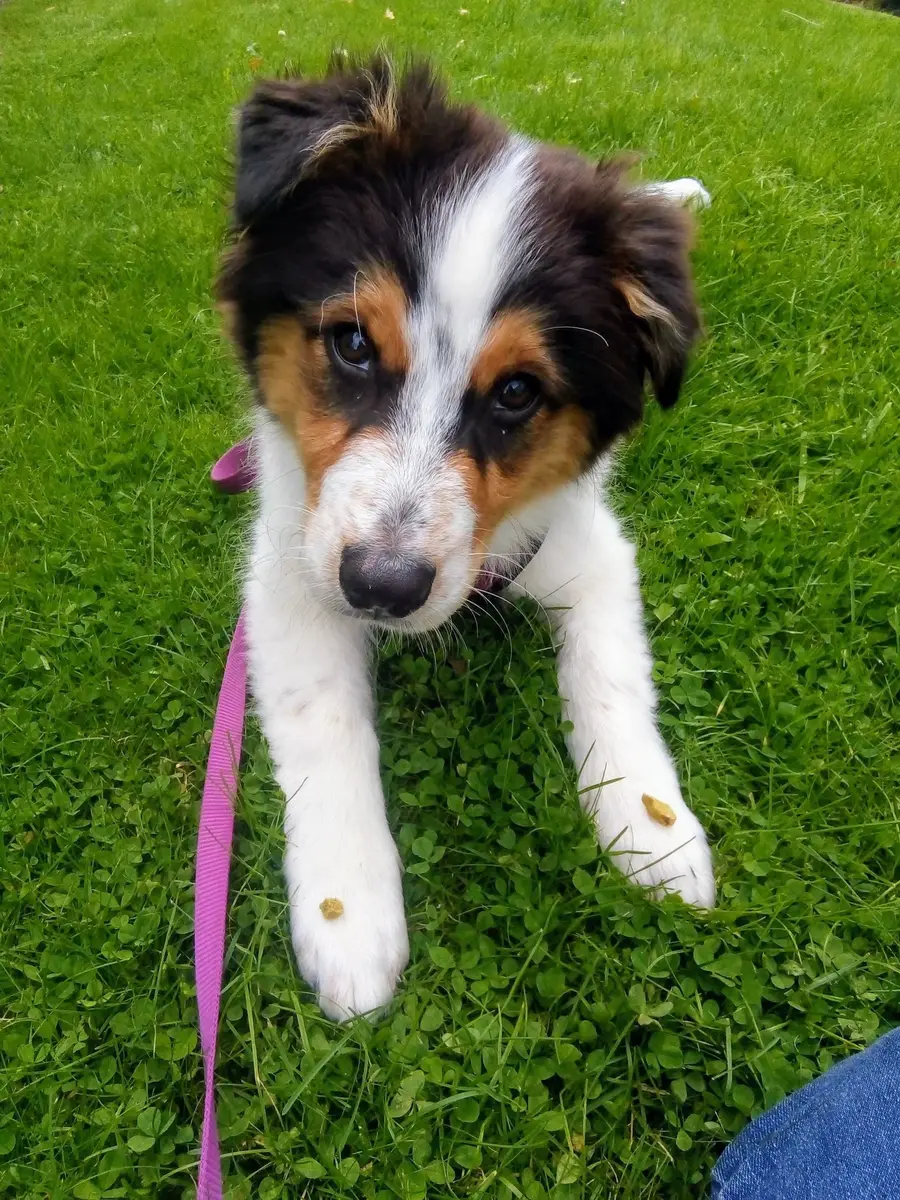
This is great for teaching impulse control and getting your dog to think before acting, as well as getting them to listen and engage with you.
- Hold a treat in your open palm and say ‘wait’.
- If your dog tries to get the treat, close your palm so your dog can’t get it.
- Reset the exercise. Continue like this until your dog does not try to get the treat.
- The second they stop trying to get the treat, say ‘yes’ and allow them to eat the treat.
This one takes time, especially while your dog is learning what you want them to do, so be patient with them.
Over time, you can leave the treat for longer before saying yes.
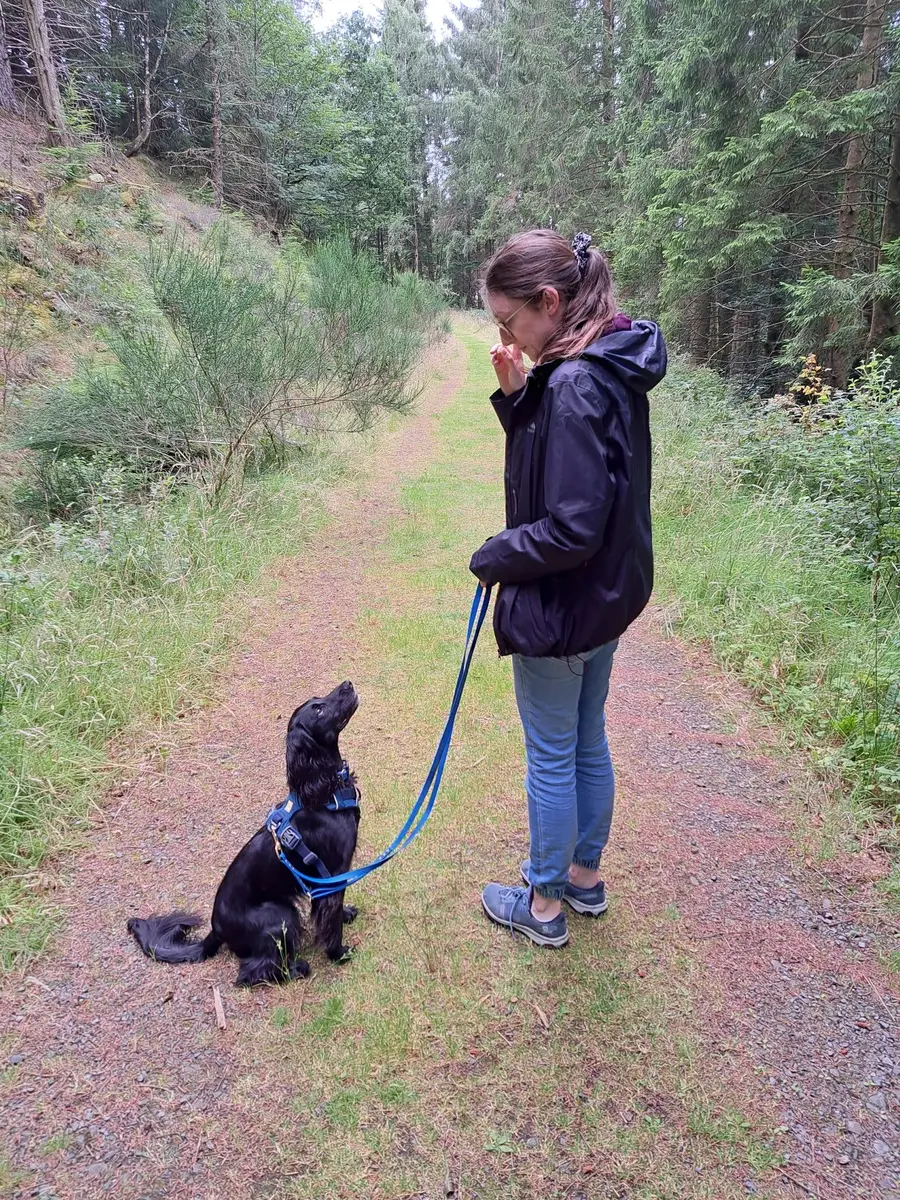
3. Watch
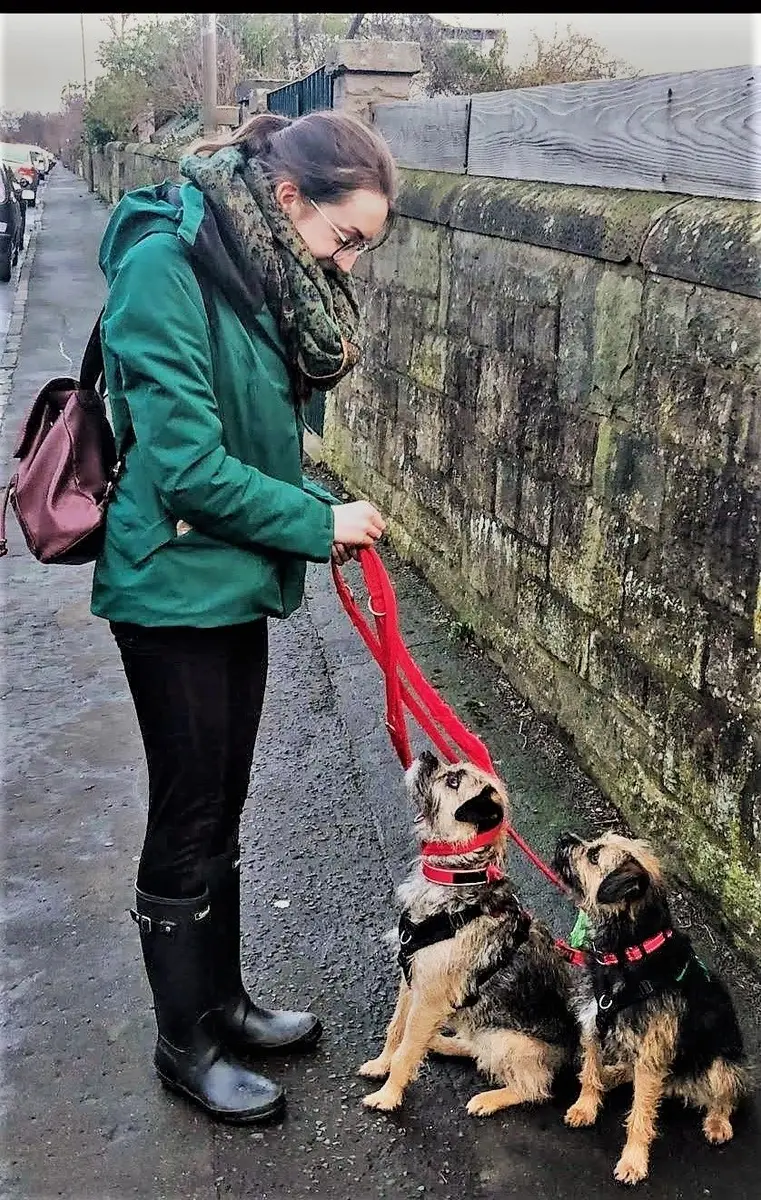
This exercise is about getting eye contact with your dog. It helps build impulse control, improve your relationship with your dog, and get your dog engaging with you.
- Put a treat between your thumb and index finger.
- Hold the treat up to your eye and say ‘watch’.
- The second your dog looks at you, give them the treat.
- Do this several times and then hold nothing up to your eye (using the same hand gesture as before) and reward with a treat from your other hand.
Over time, you will be able to hold your dog’s eye contact for longer and from further away.
4. Touch
Touch is excellent for redirecting your dog’s attention and getting them paying attention to you.
- Put a treat between your fingers and put your palm out towards your dog, fingers pointing down towards the ground.
- Your dog will automatically touch their nose to your hand to get the treat. When they do say ‘touch’ and allow them to get the treat.
- Repeat several times, then do it without the treat and reward from the other hand after they have done the touch.
Over time, you will be able to do it from further away.
Use this one to get your dog’s attention on you when they are getting over excited.
5. Sniffing, Licking and Chewing
These are naturally calming behaviours for dogs and there are easy ways we can encourage them.
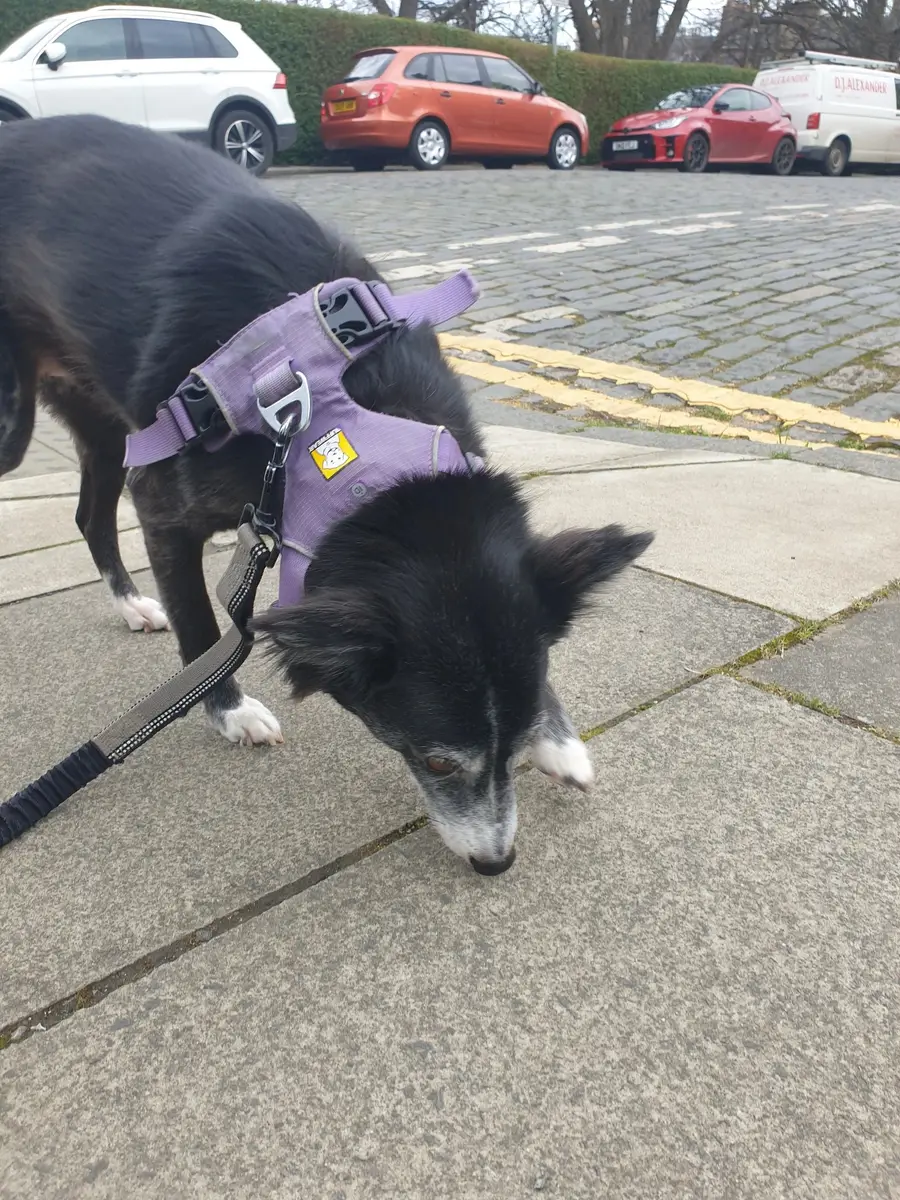
Sniffing can be encouraged by sprinkling your dog’s food around your home and garden for them to sniff out, instead of just giving it to them in a bowl. You could also use a snuffle mat.
If your dog isn’t food motivated, hide a toy for them to sniff out.
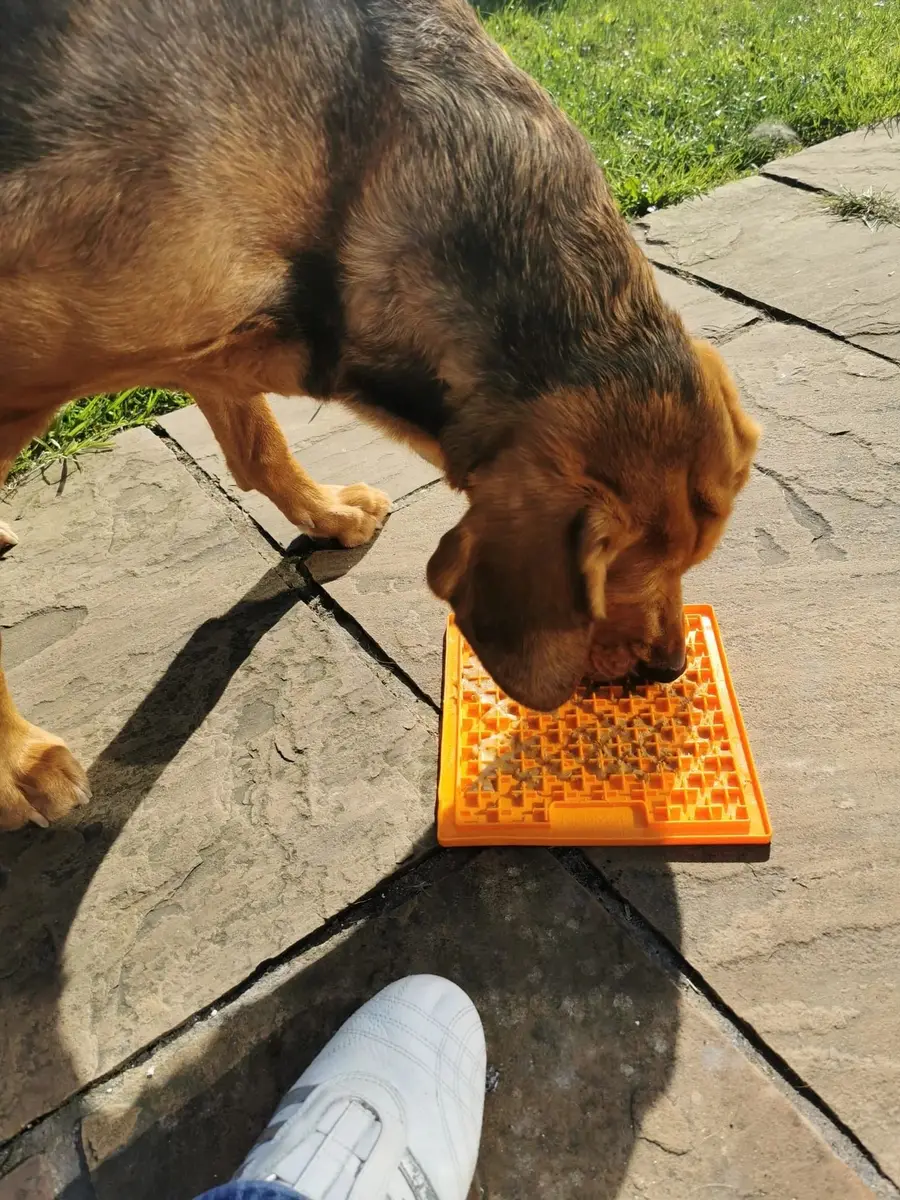
Licking can be encourage by using a lickimat. These are great for when the doorbell rings as your dog will be busy licking instead of jumping up on guests or barking at the bell.
Make sure your dog has plenty of safe opportunities to chew. Avoid rawhide as it is highly processed. Natural chews are best. Always supervise your dog with chews.
Practice these exercises regularly to help your dog manage their emotions and prevent them from becoming overexcited. They will take time and practice to learn, but it is definitely worth the effort!
If you need any help training your dog, do get in touch: www.rosypawsedinburgh.co.uk/contact
Read my blog post on easy ways to encourage calmness in your dog: https://rosypawsedinburgh.co.uk/blog/f/easy-ways-to-encourage-calmness-in-your-dog
References
Arhant, C., Winkelmann, R. and Troxler, J., 2021. Chewing behaviour in dogs–A survey-based exploratory study. Applied Animal Behaviour Science, 241, p.105372.
Battersea: https://www.battersea.org.uk/pet-advice/dog-advice/teach-your-dog-nose-touch
Dogs Trust: https://www.dogstrust.org.uk/help-advice/training/settle-training
Schipper, L.L, Vinke, C.M., Schilder, M.B. and Spruijt, B.M. 2008. ‘The effect of feeding enrichment toys on the behaviour of kennelled dogs’. Applied Animal Behaviour Science 114: 182-195.